

At times in LaTeX you want to introduce a small space between words. This is especially important in mathematical typesetting. Just adding a little bit of space hairspace, can alter the aesthetic look of the equation or mathematical entity substantially. For example consider this expression:
$|a|^{2}$
This produces the following

The | braces are too close to the character “a”. To create a better version of this we introduce a small hairspace between the two. The code for hairspace is \,.
$|\,a\,|^{2}$
This produces a much nicer looking expression.

This feature of hairspace was known to me for some time. But the problem came when I had to create a negative space. Take for example this expression:
$F_{eff} = kx$
The result of this is not so nice looking as you can see:
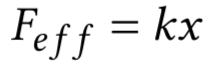
But then I came to know about a negative hairspace. The code for it is \!. Now let us introduce this in the above expression
$F_{e\!f\!\!f} = kx$
The result is much better visually:
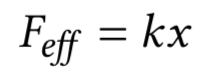
damitr
Sidenotes and label in LaTeX
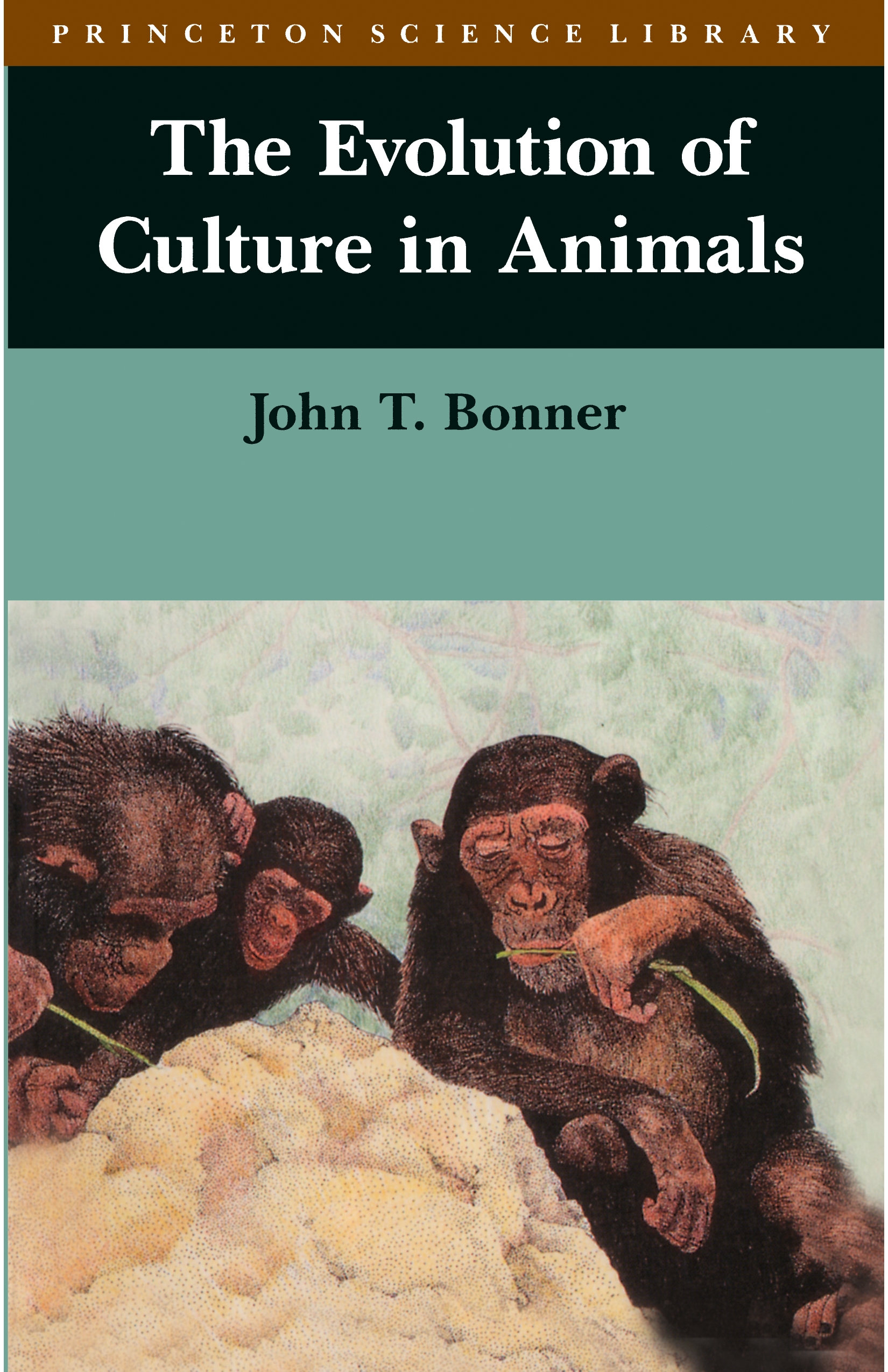
Recently I have been using the sidenotes package in LaTeX. It provides many options which I find aesthetically pleasing. For example, instead of footnotes, it gives sidenotes. This particular typesetting has been used beautifully by Tufte in his books. But even before Tufte’s books this option has been used, for example, see the beautifully designed book The Evolution of Culture in Animals by John. T. Bonner.

Not the recent reprint, some idiots at Princeton University Press have completely killed the aesthetically pleasing landscaped typesetting to portrait one (and a not very good one)! In general Bonner’s book are a visual treat in terms of designing and of course the content as well. His meticulous detail to the images, and use of log-scales to depict biological scale in time and space it something that I have not seen very often.
The Evolution of Culture in Animals uses a landscape mode with sidenotes and figures in margins extensively. This is the exact functionality that the sidenotes package provides. Even the tufte-book and tufte-handout classes use this package in a modified manner.
When using sidenotes package, I found that the marginfigure and margintable environments worked without a problem when using a label and referring them to in the document. But when it came to the sidecaption option for wider figures and tables, somehow I could not get the referencing to work. The hyperref showed the correct page and even the captions had the correct numbers for tables and figures. But the label and \ref{} to it didn’t work.
For example, if a figure was created as such:
\begin{figure}

\includegraphics[width=0.8\textwidth]{eagle.jpg}

\sidecaption[][1cm]{This is an eagle.}

\label{eagle1}

\end{figure}
The first [] controls the text that appears in the List of Figures, while the second [] controls the vertical placement of the caption.
Now when I referred to this figure in the document using Figure~\ref{eagle1}, it gave an error and typeset it as Figure ??, instead of Figure 1.1 or something similar. The same problem was there for a sidecaption used for tables as well. A common mistake which usually causes this error is placing the label before the caption. So the golden rule seems to be:
Always place your
\label{}after the\caption{}.
But it was not the case in my example. A bit of digging in the log file showed this error:
Package caption Warning: \label without proper reference on input line xxx.

See the caption package documentation for explanation.
LaTeX Warning: Reference `eagle1′ on page 7 undefined on input line 415.
Now back to caption package documentation, it had this explanation for this error (page 44):
\labelwithout proper\caption
Regarding\labelthe floating environments behave differently than its non-floating counter-parts: The internal reference will not be generated at the beginning of the environment, but at\captioninstead. So you have to place the\labelcommand either just after or inside the caption text (mandatory argument of\caption).
So that was it. You have to place the \label{} inside the \caption{} environment and the issue was solved. Placing it just after the caption did not work for me.
\begin{figure}

\includegraphics[width=0.8\textwidth]{eagle.jpg}

\sidecaption[][1cm]{This is an eagle.\label{eagle1}}

\end{figure}
Undead Texts
These are the Undead Texts. Their ambition and success inevitably made these works targets of specialist rebuttals. There is probably not a single claim they make that subsequent scholarship has not queried, criticized, or refuted. Yet these texts refuse to die. Novices and experts alike remain susceptible to the spell they cast. – source
Good Example of a Bad Slide
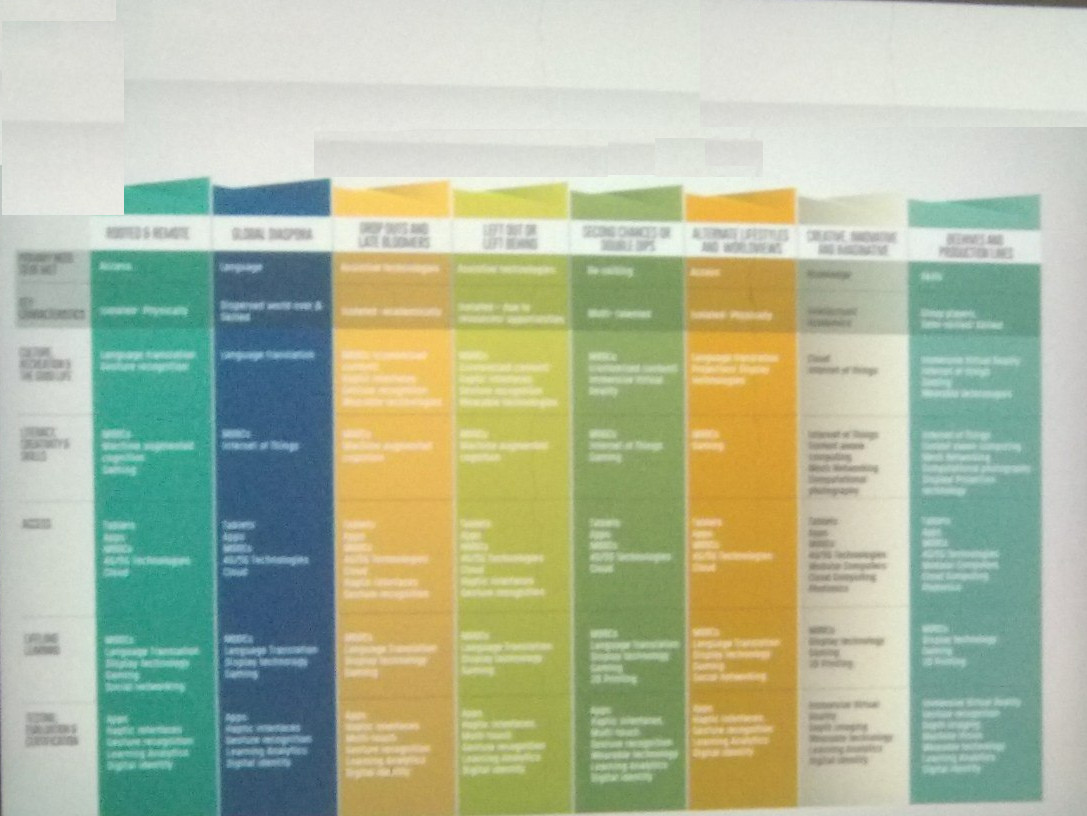
(If you are not able to read the content, rest be assured, it is not due to the photo quality, thanks to Harshit for the photo)
The title says it all, do not dump so much text on a slide that it becomes unreadable to the readers. If the purpose of the slide is to show enabling text to the readers (and supporting/cueing text to the presenter) then this goal is lost in most of the presentations that you will see. People tend to cram as much text as possible on a given slide,
“I have only 15 slides!”
But the person doesn’t mention that 8 of those slides have texts which are not readable with 10 bullet points. A particular feature in slide creating softwares (both Free and proprietary) further aids in this by automatically reducing the text size if it exceeds its standard text box. LaTeX based Beamer will just make your text go below the slide, warning you that this might not be readable, use another slide.
Be responsible, keep less text on each slide, make more slides instead.
Uberization of Education
An Uberized education is when…
An Uberized education is when – as in antiquity – one goes to a specific teacher to get lectures, bypassing the university. The students and the teachers are thus matched. If a piece of paper is necessary, it would be given by that teacher, or a group of teachers. It is not too different from the decentralized apprentice model. This already works well for executive “education”. I give short workshops in my specialty of applied probability (I have given a few with PW, YBY and RD, though only lasting 1-2 days), limited to professionals. An Uberization would consist in making longer workshops, say of 2-3 week duration, after which the attendees would be getting a piece of paper of sorts. From my experience, both students and lecturers are more sincere when they bypass institutions. And, as with other Uberizations, it would be much, much efficient economically. A full education would be a collection of such micro-diplomas, which can be done on top of a conventional one. Finally I would personally like to attend such workshops in disciplines outside my specialty. After my experience with Aramaic/Syriac last summer, I have a list of subjects I would be hungry to learn outside university systems…
Source: The Black Swan Report › An Uberized education is when…
Multiple citations, biblatex and APA
Issues with multiple citations of an author and biblatex-apa
Recently I had to refer an author multiple times in a document. I had recently shifted to biber and biblatex. The American Psychological Association (APA) style was the recommended style.
And in the final references
The author name was, let us, was Wilbur-Markus Rowland, and he had about 10-11 articles. The author had many co-authors, in some cases this author was the first author in other cases he was the second or even third one.
Now the issue that I was facing was this: The same author name was getting cited differently at different places.
For example, in some cases it appeared like
W.-M. Rowland, in other cases Wilbur-Markus Rowland, and in some cases even as Rowland. This was very confusing. And on top of all that the final references had entries like
Rowland W.-M. (W. M.)
Rowland W.-M. (Wilbur-Markus)
Rowland W. M. (Wilbur-Markus)
Rowland W. M. (W.-M.)
I checked and rechecked the bibtex entries in hope of finding some error but it was not to be found. I must have done a Clean All a dozen times, after editing the bib file.. I tried adding same name entries for Rowland as first author to be the same, but it didn’t work. This was really frustrating.
Similarly a couple of references with two different authors with a common surname were giving intials in the main text. For example, D. R. Cook and M. P. Cook. Now all other refernces (except the Rowland one) were coming as per the APA requirement, which is (Author, Year), so ideally they should have been (Cook & Weston, 1999) and (Cook, 2004). But rather they were being displayed as (D. R. Cook & Weston, 1999) and (M. P. Cook, 2004). Now no change in the bib file was changing any of this. I thought there was some issue with the bib entries. I deleted the entries and entered them again manually, but no avail.
Then I chanced upon this link
even though the year of publication differs in the two Campbell (Cook in our case) references, the lead author’s initials should be included in all text citations, regardless of how often they appear.
So the Cook mystery was solved. biblatex was compiling correctly as per the APA guidelines, the initials for the two different Cook entries must be there. This is because
Including the initials helps the reader avoid confusion within the text and locate the entry in the reference list.
Now for the Rowland entry, the next part of the blog gave me a hint towards the possible problem:
Although this rule seems straightforward, one thing that trips up some writers is how to proceed when different lead authors with the same surname are also listed in other references in which they are not the lead author.
After this I checked the entries where Rowland was second or third author. These entries differed from the entries where he was the lead author. And this was causing the problem. For each different entry style of his name, biblatex was considering him as a separate author. Hence the initials and the different references entries with names in brackets. Once all the entries for Rowland were made consistent the problem disappeared. Phew!
This issue bugged me for almost a couple of working days, to find the cause and subsequent addressing was most rewarding.
Note that the bibtex references that I had were taken from google scholar, hence differing styles in author name. Please make them consistent. This is a warning for future me and others who are reading this post.
The True Purpose Of Graphic Display – J. W. Tukey
John Wilder Tukey, one of the greatest Statistician of the last century points to what the purpose of a graphic display should be:
- Graphics are for the qualitative/descriptive – conceivably the semi quantitative – never for the carefully quantitative (tables do that better).
- Graphics are for comparison – comparison of one kind or another – not for access to individual amounts.
- Graphics are for impact – interocular impact if possible, swinging-finger impact if that is the best one can do, or impact for the unexpected as a minimum – but almost never for something that has to be worked at hard to be perceived.
- Finally, graphics should report the results of careful data analysis – rather than be an attempt to replace it. (Exploration-to guide data analysis – can make essential interim use of graphics, but unless we are describing the exploration process rather than its results, the final graphic should build on the data analysis rather than the reverse.)
From:
Tukey, J. W. (1993). Graphic comparisons of several linked aspects: Alternatives and suggested principles. Journal of Computational and Graphical Statistics, 2(1), 1-33.
Alternative accounts
The appeal of the alternative account to current political palates is precisely why caution is warranted: a narrative’s popular appeal is a poor indicator of its truth.
via | Easter Island Controversy
On Design
Design is both the disruptor and being disrupted. It’s disrupting markets, organizations, and relationships, and forcing us to rethink how we live. The discipline of design is also experiencing tremendous growth and change, largely influenced by economic and technology factors. No longer an afterthought, design is now an essential part of a product, and it may even be the most important part of a product’s value.
Source: Experience design is shaping our future – O’Reilly Radar
Citation inside a Caption – LaTeX
Recently while writing my thesis, I came across a strange error while compiling with LaTeX. The problem arose when I gave a cite command inside a caption environment. The caption was for a figure. For example
\caption{This is the caption for a figure. From \cite{friend2005}}
This gave the following error:
! Argument of \Hy@tempa has an extra }.

<inserted text>

\par

l.89 ...sity estimate. From  \cite{friend2005}}
?
Runaway argument?
\@captype {\@firstoftwo {\@ifstar {\HAR@acite }{\HAR@fcite }}}\def \reserved@b
\ETC.
! Paragraph ended before \Hy@tempa was complete.
<to be read again>
\par
l.89 …sity estimate. From \cite{friend2005}}
?
A little googling around I found this site which solved the problem in a second.
So the command should read like:
\caption{This is the caption for a figure. From \protect\cite{friend2005}}
And the problem is solved. In case you are wondering what \protect does look here.