
Dev D

Dev D
Deranged-Explosive-Violent

Saw Dev D. Had heard it and about it. Had seen it in parts, now completely. Liked the movie and the posters [they are really good too]. The story is based on one of the most [ab]used characters in the Indian cinema. Just think about the dying scene in Bhansali’s DevDas. I can’t stand it, but I know many who adore the performance of the King Khan in that film. Sorry. I can’t. Period. It’s [rather he’s] not my type. Have seen the older Devs too. But, nonetheless, found them boring too. What is that fascinates directors, actors and the moviegoers to the character of DevDas. What is in the character for everybody, that again and again the character resurfaces with the cream of actors each time.

Abhay Deol has done really good work so far, I mean he is definitely much better than his two cousins. The choice of the movies that he has made over the years, and his portrayal of the characters tells his story. No need for me to certify. But the character of Dev played by Abhay is the most brilliant one he has played so far. From a boy who has everything in life in his grasp, including Paro, love of his life, to a DEVastated Dev, who is lying waste on the streets of Delhi, the journey itself is the main theme of the film and also the essence of Dev’s character.

Why is that what we desire is just within our reach, but we can never reach it?

The teasing is always there…

Life is like a juicy, ripe fruit just out of our reach.

Dev has Paro [Mahie Gill], but is unable to take her. Mahie Gill plays the role of Paro well enough. The rustic charm of a गवांर jaat babe, is present in her character and in her. The thought that she has shared herself with someone is unbearable for him. This is where the first explosion is shown. The breaking of bottle on the head, is where Dev unleashes himself, from the bonds of Paro. But the bonds are too strong, to be broken. The farther she goes from him, more intense the attraction is [F = -kx ?]. Why does the thought of sharing the one you love with someone [or even something for that matter] else is just unbearable? If this was not true lot of world’s problems would have not arisen. But this is the tendency of the human mind and the human kind. True as Mr. Smith says, we are like a virus [ Do viruses have a mind?].

I love thee not, therefore pursue me not.
– William Shakespeare: A Mid Summer Night’s Dream

Dev tells Paro, what he does not want to, its just a few moments of hate and rage, during which the silent bitterness comes out. This is one of other problems of life, you cannot tell a person how you excactly feel, the feeling is always within you, but somehow it does not find an exit. The feeling remains within you, becomes a part of you, does not depart, for there is nowhere for the feeling to exist outside you. And when you make a decision to talk about it, something else comes out, something that is not planned at all, something which has no meaning, but can be quite devastating and this is what Dev does. For me this is the “emosional atyachaar इमोसनल अत्याचार” of life. This is where Anurag Kashyap is brilliant. If it was any others formula film-maker, the scene would have had required gallons of glycerine. Dev is oblivious to the fact, even when told explicitly that he also did [ the same to] Rasika, that its the same thing Paro did. But obviously as for any self loving, self indulging person the standards for the self and the others are not the same. So is with Dev, a promiscuous Paro is not acceptable for him …

Would a promiscuous lover be acceptable to you?

Paro more stronger than before [and definitely more than Dev] and “moves on” with life. Even when promiscuous, she has an absolute love and is mad about Dev. Dev is her first and true love. But after the Dev-debacle she first reluctantly and then whole heartedly takes the new life that comes to her post-Dev. But post-Paro Dev has no where left, so he goes to Delhi. When he is unleashed he is all around but no-where in particular, like the mists of Delhi. Life for Dev, becomes a psychedelic experience for us. The life revolves in circles in bottles of vodka, fumes of smoke from cigarretes, and the ATM. The hotel room which he lives in is a sort of mirror of Dev’s own life, chaotic, orderless, yet we are somehow strangely attracted to it.

And the one encounter with Paro in Delhi, Dev again loathes her. Paro still down to Earth and still caring about Dev. [Is caring for somebody same as loving them too?] Paro does not stop his advances, but neither does she give any encouragement. [This can be really frustrating, believe me.] On the other hand, the imagery of Paro doing it with her [superman] husband is too much for Dec. This is surely इमोसनल अत्याचार.

Can you bear to see your loved one in someone else’s arms?

So he again bursts, Chunni is there to handle him. And guides him to Chanda.

Enter Chanda [Kalki]. As a daughter she has “disgraced” her family and her father kills himself in shame. But Chanda emerges stronger, from all this. Post-MMS, she lives a double life, one of a prositute [A commerical sex worker if you prefer] and one of a college student, thanks to Chunni. Chanda makes a point when she says that, what right do they have to call her a slut, when they all watched “it”. The character of Chunni identifies Dev as an appropriate candidate for the business he runs. In Dev, Chunni finds the ideal customer. And in Chanda, Dev finds the traces of lost love that he is looking for.

Though initially Dev loathes Chanda, she persists, in his life and his outbursts. A bond develops between them, which gives, if only vague, aim to Dev’s life. So there is some relief from the Vodka bottles, but this is short lived too. Dev again unable to bear Chanda doing it to another man, walks out, literally. Again the psychedelic trance life begins. The relfections on the aviator that he wears is now his life. The neon lights of the nights are what Dev sees all around him, life is like a roller coaster ride, which only goes down, always speeding up, never slowing down, but which gives Dev a high, a high to rise above all the troubles life has presented him with.

And here we [all] wander in illusions.
– William Shakespeare: Comedy of Errors


Now that Dev has a BMW, the life speeds up. The life and the BMW gets a hit, literally. The accident scence is another brilliant stroke by the director. You would otherwise see tankloads of blood and dozens of dummies being crushed by the car… But here you see the accident from Dev’s perspective, after all this film is about Dev. The scene is as it would look when you are in non-drivers seat and Dev is in drivers’. The deaths are just like bumps you would feel on a bad road. [Maybe they _are_ bumps for Dev on a bad road of life.] Overwhelmed by the experience he [rather his system] just crashes. Dev is in hospital. And in all this turmoil Sattu is dead. So Dev gets bail to attend the funeral. While coming back, Dev just runs away from the harsh
realities in waiting for him back in Delhi. Dev escapes to the Himalayas, maybe seeking a nirvana, maybe just running away like a coward. Finally, his health forces him to come back to the coarse realities in Delhi.

… my pride fell with my fortunes.
– William Shakespeare As You Like It

Once the cash reserves are all gone, Dev takes to the streets literally. Paro is nowhere, neither is Chanda. Dev is and has lost. He desparately looks for Chanda, not Paro mind you, but she is nowhere to be found. Roaming aimlessly on the streets of Delhi, finally Dev finds Chanda, or is it the other way round? Anyway the end is a welcome relief from the other who followed the original DevDas blindly, without any brains good enough for their own interpretation of the story.

The story _is_ loosely based on Devdas, the novel.

Final rating 4.8 out of 5. Must see.

The Sick Rose

O Rose, thou art sick!
The invisible worm
That flies in the night,
In the howling storm,

Has found out thy bed
Of crimson joy:
And his dark secret love
Does thy life destroy.


William Blake

This poem is a part of William Blake’s Songs of Experience published in 1794. The above image is the hand illustration of the poem as it appeared in the 1794 edition. Though a little one, this poem like Blake’s other works this poem is loaded with meaning. Just give them as the key words and you will find a lot of entries explaining the meaning of the poem. Wikipedia article also gives multiple meanings to the metaphors used in the poem. Some other commentaries are here and here. As is with other things people see things in their own perspective, with the Experience that they have. No wonder that Blake put this poem of his in the Songs of Experience.

[I first read about Blake in the Rama Series by Arthur C Clarke. Blake’s Tyger is recited there, after seeing the vastness of the alien space ship which is named Rama.]

We as humans try to understand the things that we see and experience as a part of the mental structures that already exist in our minds. Cognitively this is the only way in which can survive in this world. Try to imagine a world in which no new things that you see or experience are not a part of what you have in your mind.

With the comments from others apart, Blake produces two strong metaphorical views about the poem in me. These two views share lines of thoughts and they don’t share some. The interpretation that we can do of these lines depends on the view of the world that we have. Everyone tries to look with the experience that they have at back of their mind. No wonder many people don’t agree to what they perceive in literature.

So what are the interpretations that one can make from these lines?
[One thing is for sure, now it does not matter what Blake had in mind when he wrote this poem. The readers now can make their own interpretations, about what Blake had to say, whether he meant the same thing or not is an entirely different matter.]

O Rose, thou art sick!

In this line the word Rose is a metaphor for woman. If we take a closer look at the Rose in the illustration by Blake, we see a feminine figure metamorphosing from the Rose. So the rest of the line would imply that the woman is sick. But what kind of sickness is this?

The invisible worm That flies in the night,
In the howling storm, Has found out thy bed Of crimson joy: And his dark secret love Does thy life destroy.

What can be an invisible worm? The invisible worm is the cause of the sickness of the rose. The description that Blake adds is that it flies in the night. One of the interpretations is that the worm is an metaphor for the phallus and the sickness of the Rose that is being referred to is a STD. Another of the interpretation is that the it is the act of losing of the virginity and becoming impregnated. The worm seen in this sense is the phallus. As this happens in the night the worm is seen to be flying in the night. One more interpretation for the invisible worm would be the semen, which “flies” in the night.

The howling storm in the night can very well represent the screams of pleasure or pain. In which the woman is ruined [the life destroyed], as she is now impregnated.

The word crimson is also used metaphorically. It can represent both love and blood. For the color of love is red, and that too a dark one. So is the color of blood. The bed of crimson joy can mean the actual bed where the blood of the virgin has been spilled. The other is the red womb of the woman, which has been impregnated [found] by the invisible worm [sperm].

Another interpretation is that the rose symbolizes love, and the worm but a troubled soul. The worm flying around in the night is a lover long lost but never out of one’s mind. The lines

And his dark secret love,
Does thy life destroy.

May represent lovers who may not have been of actually been together, but a unified by a secret bond. These lines can also be taken to represent a secret lover who has married another. But the love still persists and is taking its toll on the woman, who is now in confusion [howling storm], as the secret lover has now [found] a place deep in her heart [the crimson bed]. Hence the life of the woman due to it [secret lover ] stands to ruin.

These are some of the few interpretations of Blake’s Sick Rose, whether you agree or not it depends on you. Many of the interpretations may seem far fetched, but then Blake is such an author that you need to stretch mentally a bit in order to grasp the depth of his thoughts.

Whatever the interpretations, this is one of the most imagination provoking and concise writing I have come across. Blake makes your imagination run wild and the various scenarios unfold which makes these 8 lines come to life.

Heaven and Hell

Circle Limit IV
Heaven and Hell
by M C Escher
Yesterday I have put up Escher’s Circle Limit IV – Heaven and Hell on my new desk. The Circle Limit series of drawings was drawn by Escher are essentially what are known as his hyperbolic tesselations. The new computer table that I have got has an odd shape. On one end the side is circular and it smoothly metamorphises into rectangle on the other side. Though it is not at all comparable to what Escher has accomplished, I feel bad even when I use the word metamorphosis for this, but I have not found anything better. The table is designed for use with a desktop. So it has sections for different parts of the desktop like the monitor, CPU keyboard etc.
Anyways the main point that I want to tell is that the table at one end is circular. Since I had put Escher’s Three World on another table, I thought it would be a good idea to use a ciruclar print of Escher for this part of the table. Of all the prints I had, which I had taken when I had at my disposal A3 sized printers, the one which fitted the purpose seemed to be Circle Limit IV – Heaven and Hell.
Let us see what Escher himself has to say about this series of works viz. The Circle Limits:
So far four examples have been shown with points as limits of infinite smallness. A diminution in the size of the figures progressing in the opposite direction, i.e. from within outwards, leads to more satisfying results. The limit is no longer a point, but a line which border’s the whole complex and gives it a logical boundary. In this way one creates, as it were, a universe, a geometrical enclosure. If the progressive reduction in size radiates in all directions at an equal rate, then the limit becomes a circle. [1]
And he says this about Heaven and Hell:
CIRCLE LIMIT IV, (Heaven and Hell)
[Woodcut printed from2 blocks, 1960, diameter 42 cm]
Here also we have the components diminishing in size as they move outwards. The six largest (three white angels and three black devils) are arranged about the centre and radiate from it. The disc is divided into six sections in which, turn and turn about, the angels on a black background and then the devils on a white one, gain the upper hand. in this way, heaven and hell change place six times. In the intermediate, “earthly” stages, they are equivalent. [1]
Like most of Escher’s drawings this one also takes you to a different world. A world which is far away from the reality. A world of mathematics. A world of abstraction. But then as always we can make connections between this abstract world and the real world. The connections that we can make are dependent on the world view that we have. Some people fail to make the connection. They cannot `see’.
The Circle Limit series is what brought Escher to the eyes of the mathematicians. H. S. M. Coxeter used Circle Limit II as an illustration in his article on hyperbolic tesselations. Since then the other works of Escher have been examined by the mathematicians, and we find that very deep and fundamental ideaso of mathematics are embedded in them. As to how Escher did it is amazing. The kind of clear insight that Escher exhibits in his artwork is astounding. He could visualize the mathematical transformations in his head and then transform them onto the artwork he was working with. Escher has said
I have brought to light only one percent of what I have seen in the darkness. [2]
This must be certainly true, as most of his artwork is nowhere close to what we see in the light. I rate the artwork of Escher as greater than that of the renessaince artist’s as they had just beautifully drawn what one could “see.” But with Escher we go a step beyond, imagination takes the control. What interests me in Escher is that he can make you imagine the unimaginable. What you know is not possible is demonstrated just in front of your eyes. Logic is discarded. Rather it is kept in the basement which is upstairs for Escher.
Yesterday you start to believe what you thought was impossible tommorow.
The way different things merge for Escher is just unparalled in the work of other artists. What has now become known as “Escheresque” is just the typical of his style. Lot of later artists are influenced by the works of Escher, I have found one Istvaan Orosz particulary good. There are others who are equally good but I don’t remember their names now….
Coming back to Heaven and Hell. The main artwork is in a woodcut format in black and white. For me this is a kind of dyad which represents the world. The idea of two opposing forces one termed to be evil and the other good are all permeating in the Universe. Here also the bat-devils and the angels are the representative of the same. There is no part of the Universe where these two are not present. It might seem that somewhere far out there there is nothing, but it is not so. Even there, the design is the same, it is just too far for us to see. This is what harmony in the universe is about. It is the same everywhere, when you have a broad enough world-view. The cosmologists say that the Universe is homogenous and isotropic, if you choose to “see” it at the right scale. The cosmologists often use Heaven and Hell to illustrate this point. For me introduction to Escher came in a talk by a cosmologist who used The Waterfall to illustrate the idea of a perpetual motion machine. Since then I have become addicted to Escher, as has everybody else who has some sense of imagination. For those who cannot appreciate Escher, I can just pity at their miserable imagination.
References:
[1] The Graphic Work of M C Escher by M C Escher
Ballantine 1975, ISBN 345246780595
[2] M. C. Escher (Icons) by Julius Wiedemann (Editor)
Taschen 2006, ISBN 3822838691

Heaven and Hell


Circle Limit IV
Heaven and Hell

by M C Escher

Yesterday I have put up Escher’s Circle Limit IV – Heaven and Hell on my new desk. The Circle Limit series of drawings was drawn by Escher are essentially what are known as his hyperbolic tesselations. The new computer table that I have got has an odd shape. On one end the side is circular and it smoothly metamorphises into rectangle on the other side. Though it is not at all comparable to what Escher has accomplished, I feel bad even when I use the word metamorphosis for this, but I have not found anything better. The table is designed for use with a desktop. So it has sections for different parts of the desktop like the monitor, CPU keyboard etc.
Anyways the main point that I want to tell is that the table at one end is circular. Since I had put Escher’s Three World on another table, I thought it would be a good idea to use a ciruclar print of Escher for this part of the table. Of all the prints I had, which I had taken when I had at my disposal A3 sized printers, the one which fitted the purpose seemed to be Circle Limit IV – Heaven and Hell.

Let us see what Escher himself has to say about this series of works viz. The Circle Limits:

So far four examples have been shown with points as limits of infinite smallness. A diminution in the size of the figures progressing in the opposite direction, i.e. from within outwards, leads to more satisfying results. The limit is no longer a point, but a line which border’s the whole complex and gives it a logical boundary. In this way one creates, as it were, a universe, a geometrical enclosure. If the progressive reduction in size radiates in all directions at an equal rate, then the limit becomes a circle. [1]

And he says this about Heaven and Hell:

CIRCLE LIMIT IV, (Heaven and Hell)
[Woodcut printed from2 blocks, 1960, diameter 42 cm]
Here also we have the components diminishing in size as they move outwards. The six largest (three white angels and three black devils) are arranged about the centre and radiate from it. The disc is divided into six sections in which, turn and turn about, the angels on a black background and then the devils on a white one, gain the upper hand. in this way, heaven and hell change place six times. In the intermediate, “earthly” stages, they are equivalent. [1]

Like most of Escher’s drawings this one also takes you to a different world. A world which is far away from the reality. A world of mathematics. A world of abstraction. But then as always we can make connections between this abstract world and the real world. The connections that we can make are dependent on the world view that we have. Some people fail to make the connection. They cannot `see’.

The Circle Limit series is what brought Escher to the eyes of the mathematicians. H. S. M. Coxeter used Circle Limit II as an illustration in his article on hyperbolic tesselations. Since then the other works of Escher have been examined by the mathematicians, and we find that very deep and fundamental ideaso of mathematics are embedded in them. As to how Escher did it is amazing. The kind of clear insight that Escher exhibits in his artwork is astounding. He could visualize the mathematical transformations in his head and then transform them onto the artwork he was working with. Escher has said

I have brought to light only one percent of what I have seen in the darkness. [2]

This must be certainly true, as most of his artwork is nowhere close to what we see in the light. I rate the artwork of Escher as greater than that of the renessaince artist’s as they had just beautifully drawn what one could “see.” But with Escher we go a step beyond, imagination takes the control. What interests me in Escher is that he can make you imagine the unimaginable. What you know is not possible is demonstrated just in front of your eyes. Logic is discarded. Rather it is kept in the basement which is upstairs for Escher.

Yesterday you start to believe what you thought was impossible tommorow.

The way different things merge for Escher is just unparalled in the work of other artists. What has now become known as “Escheresque” is just the typical of his style. Lot of later artists are influenced by the works of Escher, I have found one Istvaan Orosz particulary good. There are others who are equally good but I don’t remember their names now….

Coming back to Heaven and Hell. The main artwork is in a woodcut format in black and white. For me this is a kind of dyad which represents the world. The idea of two opposing forces one termed to be evil and the other good are all permeating in the Universe. Here also the bat-devils and the angels are the representative of the same. There is no part of the Universe where these two are not present. It might seem that somewhere far out there there is nothing, but it is not so. Even there, the design is the same, it is just too far for us to see. This is what harmony in the universe is about. It is the same everywhere, when you have a broad enough world-view. The cosmologists say that the Universe is homogenous and isotropic, if you choose to “see” it at the right scale. The cosmologists often use Heaven and Hell to illustrate this point. For me introduction to Escher came in a talk by a cosmologist who used The Waterfall to illustrate the idea of a perpetual motion machine. Since then I have become addicted to Escher, as has everybody else who has some sense of imagination. For those who cannot appreciate Escher, I can just pity at their miserable imagination.

References:

[1] The Graphic Work of M C Escher by M C Escher
Ballantine 1975, ISBN 345246780595

[2] M. C. Escher (Icons) by Julius Wiedemann (Editor)
Taschen 2006, ISBN 3822838691

Zafarnama

Recently while reading about the last great Mughal, Aurangazeb, I came to know about a letter called Zafarnama written by Sikh Guru Gobind Singh. Zafarnama literally means letter of victory. The letter was written by the Guru when he escaped a treacherous attack by Mughals in Chamkaur. Earlier oath on Quran had been taken to allow a safe passage to the Guru. There were 40 Sikhs in all who defended a garhi in Chamkaur on 22nd December 1704, amongst them sons of Guru Gobind Singh also gave their lives. 
The letter is in verse form, written in persian. The letter has 111 verses dedicated to different things. It is said that the letter caused great remorse to Aurangazeb and hastened his death.
Maybe the all the fundamentalists should also read this letter and understand, what Aurangazeb understood at the end of his life.
More about Zafarnama here and here. The translation below is from here.
Zafarnama by Guru Gobind Singh
O Master of miracles, O Eternal and Beneficent One,
O The Provider of our sustenance, O our Deliverer, Bestower of Grace and Mercy! (1)
O Giver of Bliss, O Great Pardoner, Who holds me by the Hand,
O Remitter of sins, O Bestower of daily bread, O Charmer of our hearts! (2)
O King of kings, O Giver of Good, O guidance of the Way.
O One without colour, without form, without equal! (3)
He who has no material possessions, no army, no ground to stand upon,
Him too, Thou blessest with Heavenly Bliss. (4)
Separate from the world, yet most powerful, the Presence, Who givest Thy gifts as if Thou wert here before us. (5)
O Thou Pure One, Our Cherisher, our only Giver.
O Thou Merciful One, who givest to every land! (6)
O Greatest of the great, Thou art the God of every land:
Of Perfect Beauty, Merciful and Giver of sustenance! (7)
O Master of intellect, O Embellisher of the meek,
O Refuge of the poor, O Destroyer of the tyrant! (8)
O Protector of the faith, Fountain of eloquence,
O Knower of the Real, O Author of revelation! (9)
O Master of intelligence, O Appreciator of Wisdom,
O Diviner of secrets, O Omnipresent God! (10)
Thou knowest all that happens in the world,
And Thou resolvest all its problems and doubts. (11)
O Thou all-knowing God, O Great One,
Thou alone art the organiser of our lives. (12)
The Memorandum to Aurangzeb
I have no faith in thy oaths,
Even if thou bringest in God as thy witness. (13)
I haven’t even an iota of trust in thee,
For, all thy ministers and thy courtiers are liars. (14)
He who puts faith in thy oath on the Koran,
He in the end, comes to ruin. (15)
But, beware that the insolent crow
Can lay not its hands upon one whose protection is Huma, the Bird of Heaven. (16)
He who seeks the refuge of the tiger
Can he be harmed by a goat, a deer or a buffalo? (17)
Had I vowed even secretly on the book of my faith,
I would have withdrawn infantry and cavalry from the field. (18)
And, what could my forty men do (at Chamkaur), when a hundred thousand men, unawares, pounced upon them? (19)
The oath breakers attacked them, of a sudden, with swords, arrows and guns. (20)
I had, perforce to join battle with thy hosts,
And I too fought with the muskets and arrows as best as I could. (21)
When an affair is past every other remedy,
It is righteous, indeed to unsheath the sword. (22)
Hadn’t I taken thee to thy word upon the Koran,
I wouldn’t have chosen the path I did. (23)
I knew not that thy men were crafty and deceitful like a fox.
Else I wouldn’t have driven myself to this state. (24)
He who swears to me on the Koran
Ought not to have killed or imprisoned my men. (25)
Thy army dressed like blue bottles,
Charged us, of a sudden, with a loud bang. (26)
But, he who advanced from thy ranks beyond his defences,
Was hit with such deadly aim of my single arrow that he was deluged in blood. (27)
But they who aggressed not against us
Were left unhurt, unmolested by us. (28)
When I witnessed thy general, Nahar Khan, advancing for war,
I gave him the taste of a single deadly arrow. (29)
And many of his men who boasted of their valour,
Fled the battlefield, in utter shame. (30)
Then advanced another one of Afghan blood,
Rushing forth like flood, like a gun-ball, or a deadly arrow. (31)
He made many assaults with great courage,
Some with conscious skill, and others like mad. (32)
The more he attacked, the more he was mauled,
And then while killing two of my ranks,
He, too, fell dead in the cold dust. (33)
But the cowardly and contemptible Khawaja came not forth like a man,
And hid himself behind a wall. (34)
Had I but seen his face,
I couldn’t but have helped him too with an arrow. (35)
At last, many on their side fell on the ground
Hit by the arrows and the death dealing bullets. (36)
There was, indeed, an overpowering rain of these,
And the earth turned red like the lalla flower. (37)
Torn heads and legs lay in heaps,
As if the earth was covered with balls and sticks. (38)
The arrows whizzed, the bows twanged,
And, it brought forth from the earth only cries and yells. (39)
There were other dreadful, vengeful noises too, of weapons and men,
When men, bravest of the brave, battled like mad. (40)
But, what kind of chivalry is this in war,
That countless hosts should pounce upon a mere forty of us, (41)
When the lamp of the world veiled itself,
And the queen of night came forth with all her splendour. (42)
He who trusts, however, in an oath on God,
His Protection also in He; in need, He shows the Path. (43)
So, not even a hair of mine was touched, nor my body suffered,
For the God, the Destroyer of my enemies, Himself pulled me out to safety. (44)
I knew not that you, O man, were a perjurer,
And a worshipper of self, and a breaker of faith. (45)
Nay, you keep no faith, nor mind religion,
Nor know God, nor believe in Mohammed. (46)
He who observes the tenents of his faith,
He makes a promise but never to break it. (47)
You have no idea of what an oath on the Koran is:
Nay, you have no faith in the One God.
(48)
Now if you were to swear a hundred times on the Koran,
I’d regard not thy word, not an iota of it. (49)
Had you ever a mind to keep thy faith,
You would have taken courage and come to me. (50)
From when you gave your word,
Swearing in the name of God’s Word, it was incumbent on you to keep your faith. (51)
If your majesty were to be present here before me,
I would have with all my heart posted you with your treachery. (52)
Do now what is enjoined upon you,
And stick to your written and plighted word. (53)
The written word and the verbal promise of your envoy,
Both, should have been fulfilled by you. (54)
He alone is a man who keeps his word:
Not that he has one thing in the heart, and another on the tongue. (55)
Your promise was to honour the Qazi’s word,
If that be true, then come thou to me. (56)
If you want to seal thy promise on the Koran,
I would send the document for sure to thee. (57)
If only you were gracious enough to come to the village of Kangar,
We could then see each other face to face. (58)
On the way, there will be no danger to your life,
For, the whole tribe of Brars accepts my command. (59)
Come to me that we may converse with each other,
And I may utter some kind words to thee. (60)
I’d send thee a horseman like one in a thousand,
Who will conduct thee safe to my home. (61)
I’m a slave of the King of kings,
And ready to obey His Call with all my heart. (62)
If He were to order me thus,
I’d with utmost pleasure present myself to thee. (63)
And if you are a believer in One God,
Tarry not in what I ask you to do. (64)
It is incumbent upon you to recognise the God,
For He told you not to create strife in the world. (65)
You occupy the throne, in the name of God, the Sovereign of all creation,
But strange is thy justice, stranger thy attributes! (66)
What sense of discrimination is this? What regard for religion?
O fie on such a sovereignty! Fie a hundred times!! (67)
Stranger than strange are thy decrees, O king,
But beware that broken pledges boomerang on those who make them. (68)
Shed not recklessly the blood of another with thy sword,
Lest the Sword on High falls upon thy neck. (69)
O man, beware and fear thy God,
For, though flattery or cajolery He can be deceived not. (70)
He, the King of kings, fears no one,
And is the True Sovereign of the earth and heaven. (71)
God is the Master of the earth and the sky:
He is the Creator of all men, all places. (72)
He it is who Creates all – from the feeble ant to the powerful elephant,
And is the Embellisher of the meek and Destroyer of the reckless. (73)
His name is: “Protector of the meek”.
And Himself He is dependent upon no ones support or obligation. (74)
He has no twist in Him, nor doubt.
And, He shows man the Way to Redemption and Release. (75)
You are bound, indeed by your word on the Koran,
Let, therefore, the matter come to a good end, as is your promise. (76)
It is but meeting that you act wisely,
And be discreet in all that you do. (77)
What, if you have killed my four tender sons,
When I, like a coiled snake remain behind. (78)
It is not brave to put out a few sparks,
And stir up a fire to rage all the more! (79)
What a beautiful thought has Firdausi, the sweet-tongued poet, expressed:
“He who acts in haste, plays the devil”. (80)
When you and I will, both repair to the Court of God,
You will bear witness to what you did unto me. (81)
But, if you will forget even this,
Then, God on High will also forget you from His Mind. (82)
God will reward you well for your misdeed,
Which you launched with all your recklessness! (83)
This is the keeping of faith: this the act of goodness,
To put God above the love of life. (84)
I believe not that you know God,
Since, from you have come only tyrannous acts. (85)
The Beneficent God also will know thee not,
And will welcome not thee with all thy riches. (86)
If now you swear a hundred times on the Koran,
I will not trust you even for a moment. (87)
I will enter not your presence, nor travel on the same road,
Even if you so ordain, I would oblige you not. (88)
O Aurangzeb, king of kings, fortunate are you,
An expert swordsman and a horseman too: (89)
Handsome is your person and your intellect high,
Master of the lands, ruler and emperor. (90)
A skilled wielder of the sword and clever in administration,
A master-warrior and a man of charitable disposition. (91)
You grant riches and lands in charity,
O one of handsome body and brilliant mind. (92)
Great is your munificence, in war you are like a mountain,
Of angelic disposition, your splendor is like that of Pleiades. (93)
You are the king of kings, ornament of the throne of the world:
Master of the world, but far from religion! (94)
I warred with the idol-worshipping hill chiefs,
For, I am the breaker of idols and they their worshippers. (95)
Beware, the world keeps not faith with any:
He who rises also falls and comes to grief. (96)
And look also at the miracle that is God,
That He may destroy a whole host through a single man! (97)
What can an enemy do to him whose friend is God?
For the function of the Great Bestower is: To Bestow. (98)
He grants Deliverance and shows also the Way.
And He teaches the tongue to utter His praises, in love. (99)
In the time of need, He blinds the enemy,
And protects the helpless from all injury and harm. (100)
And he who acts in good faith,
On him, the Merciful One, rains His Mercy. (101)
He who serves Him with all his heart,
God blesses him with the Peace of Soul. (102)
What harm can an enemy do to him,
On whom is the Please of God, our Supreme Guide. (103)
The Creator-Lord is ever his refuge, even if tens of thousands of hosts were to proceed against him. (104)
If you have the pride of your army and riches,
I bank upon the Praise of God, the Almighty. (105)
You are proud of your empire and material possessions, while I am proud of the Refuge of God, the Immortal. (106)
Be not heedless: for the world lasts but a few days,
And man may leave it, one knows not when. (107)
Look at
the ever changing faithless world:
And see what happens to every house, every denizon. (108)
If you are strong, torture not the weak,
And thus lay not the axe to thy empire. (109)
If the One God is one’s Friend, what harm can the enemy do,
Even if he multiplies himself a hundred times? (110)
A thousand times let an enemy assault him,
And yet touch not even a hair on his head. (111)
 

Why?

The first time I had seen her, she was different. She seemed energetic, flamboyant and full of life. There was a sparkle in her eyes which I have not seen in many. The dusky complexion of hers with the kohl lined eyes had made an imapct on me, which was not easy to forget. And to add to that she had a great sense of dressing, which again is not easy for me to forget. The choice of colors and materials was almost perfect. And her smile, it was a confidant and smile of a winner. Anywhere I would have recognized her. She was hard to forget. I would have liked to retain this image of hers….
But ….
The other day saw her and I was devastated. The first thing I feel bad about is that even though she was sitting close to me, I failed to recognize her. This is what hurt met the most. Then after straining the memory a bit she came to light. And I felt sorry for her…
I may never know the reasons why she became so…
Maybe there were genuine reasons, maybe she could have been helped, 
Maybe….

Chatrapati Shivaji Maharaj


Update 27 November 2021

A new post with cleaned images formed into pdf booklet
Check out this post.
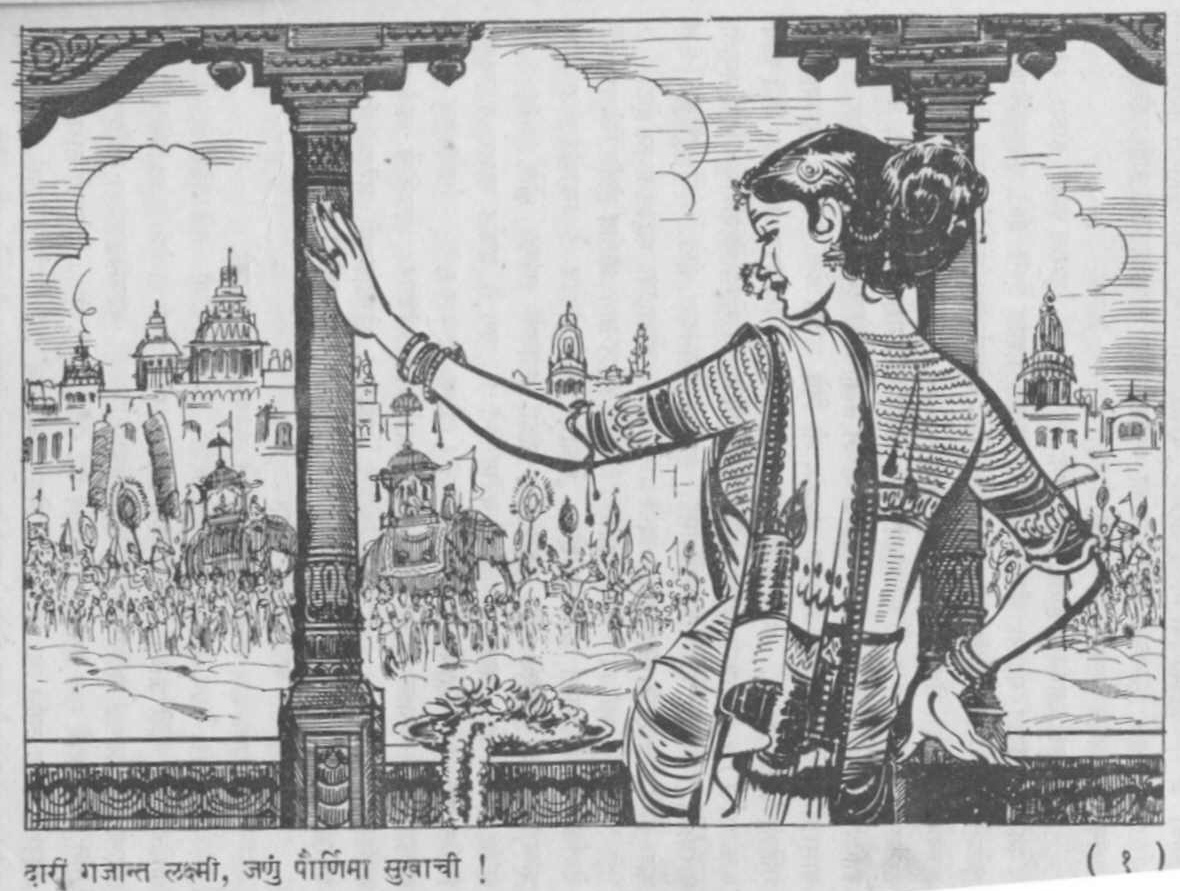
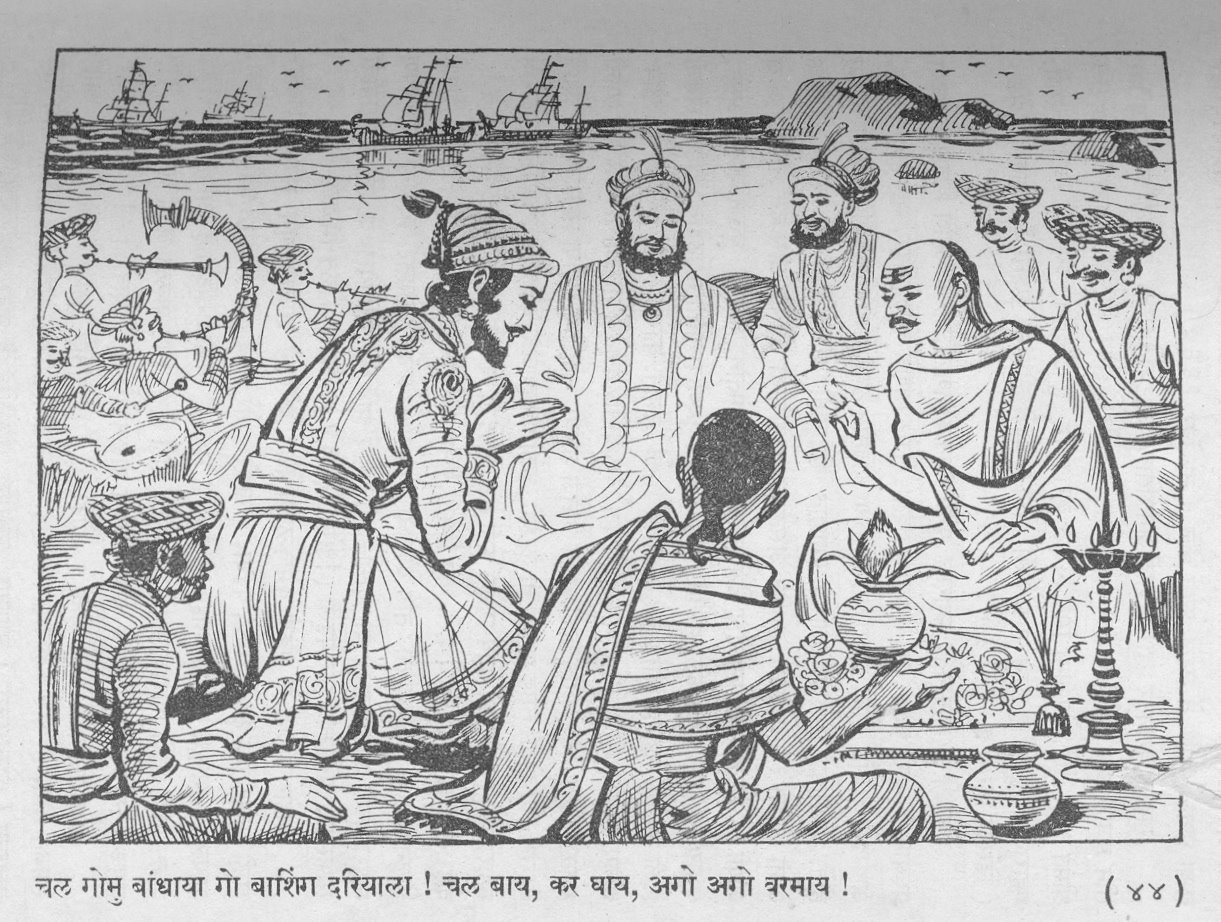
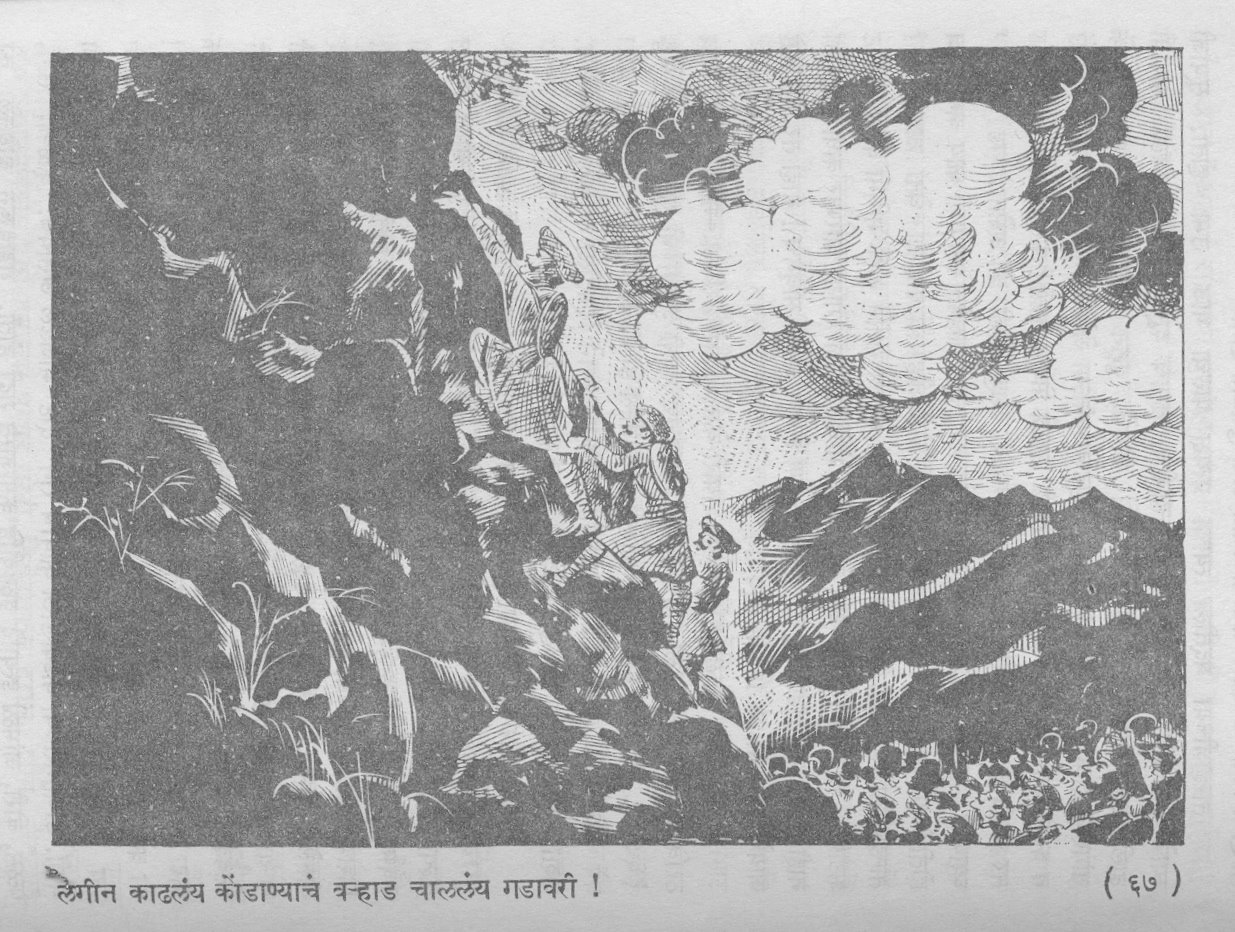
छत्रपति शिवाजी महाराजांची कहाणी…
(१) दारी गजान्त लक्ष्मी, जणुं पौर्णिमा सुखाची!
(२) काळ अाला ! काळ अाला ! पेटलेल्या वासनांनी ! धाड ही पडली गिधाडी ! वेढिलें दु:शासनांनी !
(३) लक्ष्मी घरात अाली ही अाज भोंसल्यांच्या !
(४) चिरडुनि गेली, भरडुनि गेलीं, नातींगोतीं क्षणांत सारी !
(५) दे अंबिके, दे चंडिके, दे शारदे वरदान दे !

(६) स्वप्नास पंख फुटले ! पंखांत स्वप्न लपलें ! गर्भंातल्या जिवाचे हुँकार येथ उठले !
(७) फिरली मर्जी फिरला वारा ! फिरल्या नजरा फिरल्या धारा !
(८) कुणि अानंद घ्या ! कुणि मुकूंद घ्या ! कुणि गोपाळ घ्या !
(९)


(९२) अंधारासच फितूर झाला किरण रवींचा हाय कसा ?
(९३) हाय शेवटी हेंच कपाळी ! घात अामुचा काय असा ?
(९४) अविचार कैसा केलास रे पोरा ! कोणाच्या रे घरां, गेलास तूं ?


(९५) दिंडी गेली पुढें ! येतो अाम्ही देवा ! राग न धरावा ! लेंकुराचा !

संदर्भ ग्रंथ: राजा शिव छत्रपति – बाबासाहेब पुरंदरे
 

The 5 Φ’s of Life

Life as I see it, has five essential `F’s’. Many people may not agree to them, but then this is my blog, so I will tell, whether you like it or not. I will give my reasons for each one, why it is esential according to me. You may agree, or disagree, or give no opinion, it does not matter. Since this blog is more like a personal diary, which I will not link to anybody, I think it is safe to write things here, which I would not like to be in public.
[But then am I not contradicting myself, when I am putting my personal thoughts in a public place?]
So the five F’s

  • Phood: Food is essential for our survival, this represents a living organisms most basic needs. This is what distinguishes us from non-living matter. But the food just should not be for sustenance. It should also be enjoyed. What is the point in eating something that you don’t like? No I don’t mean that we get to eat everything that we like, [I am definitely not suggesting that if you don’t have breads then you should eat cakes], but with whatever we have to eat, we should be enjoying it. If you make the food [not like the plants] but in the more human sense of the world. When you “make” food you get joy of creating something wonderful, if you do not then I am sorry for you. Also the cook should have the complete freedom to do with the food .
  • Philosophy: This is what distinguishes us from the other living beings, we have to have a philosophy of our own, or at least one that is taken from others. But what is essentially needed is to critically look at the aspects of life.
  • Phuck: Well what to say about this? I guess you understand my feelings!
  • Physics: Physics according to some people is the pinnacle of our achievement. Since I am a physicist by training, I have included physics here. Physics has given me a skeptical attitude towards things in life. Though this is not the only path which will lead you here nor that everyone who is a physicist by training will go along this path, but this was my path, hence I list is here.
  • Photography: I have included photography for two reasons.[I am still an amateur [literally and figuratively], as I have not been paid for anything that I have done so far.] One is that photography enables you to store moments, that you have for an extended period of time, and that too in a form that you can share with other people. The other reason is about the art of photography itself. When you are behind a camera, you start to see things differently, from differently perspectives and angles. Is this what not a skeptic needs? Photography in a way provides me with practical tools of implementing many philosophical ideas which would otherwise remain abstract.