Information is power. But like all power, there are those who want to keep it
for themselves. The world's entire scientific and cultural heritage, published
over centuries in books and journals, is increasingly being digitized and locked
up by a handful of private corporations. Want to read the papers featuring the
most famous results of the sciences? You'll need to send enormous amounts to
publishers like Reed Elsevier.
There are those struggling to change this. The Open Access Movement has fought
valiantly to ensure that scientists do not sign their copyrights away but
instead ensure their work is published on the Internet, under terms that allow
anyone to access it. But even under the best scenarios, their work will only
apply to things published in the future. Everything up until now will have been
lost.
That is too high a price to pay. Forcing academics to pay money to read the work
of their colleagues? Scanning entire libraries but only allowing the folks at
Google to read them? Providing scientific articles to those at elite
universities in the First World, but not to children in the Global South? It's
outrageous and unacceptable.
"I agree," many say, "but what can we do? The companies hold the copyrights,
they make enormous amounts of money by charging for access, and it's perfectly
legal - there's nothing we can do to stop them." But there is something we can,
something that's already being done: we can fight back.
Those with access to these resources - students, librarians, scientists - you
have been given a privilege. You get to feed at this banquet of knowledge while
the rest of the world is locked out. But you need not - indeed, morally, you
cannot - keep this privilege for yourselves. You have a duty to share it with
the world. And you have: trading passwords with colleagues, filling download
requests for friends.
Meanwhile, those who have been locked out are not standing idly by. You have
been sneaking through holes and climbing over fences, liberating the information
locked up by the publishers and sharing them with your friends.
But all of this action goes on in the dark, hidden underground. It's called
stealing or piracy, as if sharing a wealth of knowledge were the moral
equivalent of plundering a ship and murdering its crew. But sharing isn't
immoral - it's a moral imperative. Only those blinded by greed would refuse to
let a friend make a copy.
Large corporations, of course, are blinded by greed. The laws under which they
operate require it - their shareholders would revolt at anything less. And the
politicians they have bought off back them, passing laws giving them the
exclusive power to decide who can make copies.
There is no justice in following unjust laws. It's time to come into the light
and, in the grand tradition of civil disobedience, declare our opposition to
this private theft of public culture.
We need to take information, wherever it is stored, make our copies and share
them with the world. We need to take stuff that's out of copyright and add it to
the archive. We need to buy secret databases and put them on the Web. We need to
download scientific journals and upload them to file sharing networks. We need
to fight for Guerilla Open Access.
With enough of us, around the world, we'll not just send a strong message
opposing the privatization of knowledge - we'll make it a thing of the past.
Will you join us?
Aaron Swartz
July 2008, Eremo, Italy
via | Open Access Manifesto
NYT Newspeak
Asylum is for people who are afraid to return to their own country because they fear persecution, unlawful imprisonment or even death because of their race, their ethnicity, their religion, their membership in particular social or political groups, or their political beliefs.
Mr. Snowden undoubtedly fears returning home because he would be arrested and prosecuted. But those fears do not qualify him for asylum. And does he really feel safer in a country where Mr. Putin, an increasingly authoritarian leader, has jailed and persecuted his critics?
via NYTimes
This is complete newspeak on part of NYT. Mark the last words in the first quote “their political beliefs”. The case of Snowden is not about military secrets, but about his political beliefs. The belief that those in power should not abuse it, the belief that those who have abused the power should be brought to light. It is in fact for these very beliefs they are targeting him.
And why should not he fear arrest and prosecution? As they have done with Manning, they will do with him and Assange. This would be just to set an example, so that no one else does it. Actually Putin and Obama are no different. If at all someone from any other country, lets say Cuba, would come to the US, having leaked Cuban secrets, won’t the US consider giving them asylum. And does giving that person the asylum, has to do anything with how Obama himself is running the show. If spying on your own people, breaching their privacy to the fullest is okay then jailing and persecuting the critics is no different.
What is in thy name?
They say “What is in the name?”, I ask “What is in thy name?”
I use the alias damitr in many places. It is actually an acronym for my full name. My name among its various meanings also means something which is ‘the immeasurable.’ But recently while solving an anagram problem it had an idea: what all meanings can be derived from this acronym?
So I used a Free Software named an, apparently one of the original writers of the program is Julian Assange. But the usage is very simple, and it is available on Debian repositories,
So I typed
$an damitr
And I got all the possible combinations of these 6 words. It turned out some of them are quite meaningful and do actually make sense why I am ‘the immeasurable’!
Some of the interesting anagrams are:
triad m
admit r
dirt am
am dirt !
dirt ma
ma dirt
dart i’m
i’m dart
dart mi
dram it
Mt. Arid
Mt. Raid
rid mat
rid tam
dim tar
dim art
dim rat
mid art
mad it r
Dr Mita
Dr. Amit!
Dr Tima
Dr. Tami
Dr. Itam !
di mart
i’d mart
id mart
id tram
i’d tram
di tram
ad trim
d tarim
Among others…
Pedagogy of Idea of Power
A paper from much later Papert IBM Journal 2000
“What’s the big idea? Toward a pedagogy of idea power
Here he distinguishes between the psychological (how a person is
affected by a treatment) and epistemological (about ideas) aspects of
learning and assessment. It is rather unfortunate that researchers (much
to Papert’s dismay) choose to study “effects of programming (or of LOGO
or of Computer)” on children after a certain exposure akin to a medical
treatment. This is certainly not what was envisioned by Papert for LOGO
and computers. He also adds that the third word in the subtitle of
“Mindstorms: Children, Computers and Powerful Ideas”, namely powerful
ideas is something that most researchers forgot. They only concentrated
on the earlier two and left the powerful ideas outside the classroom and
the school.
Also for the current practices in the fields of research in education
and especially constructvism which is in vogue now, he has following
critique (which I think is prevalent methodology and framework in our
own centre and applies to them as well):
“Consider Michael’s relationship with school mathematics. Learning how
to find the common denominator of a bunch of fractions is boring for him
because he is not able to use it in any exciting way. It supports
neither flights of the mind nor “hands-on” projects.
Enter a constructivist who says: Michael will have a better relationship
with the manipulation of fractions if he discovers the rules himself. So
situations are created (often with great ingenuity) that will lead
children to “discover” the rules of arithmetic. But being made to
“discover” what someone else (and someone you may not even like) wants
you to discover (and already knows!) is not Michael’s idea of an
exciting intellectual adventure. The idea of invention has been tamed
and has lost its essence. He
wants to fly, but what this kind of constructivism offers him is more
like decorating the captive bird’s
cage.
This failure of the constructivist to meet Michael’s needs represents a
double whammy of disempowerment. Jean Piaget’s very strong idea that all
learning takes place by discovery is emasculated by its translation into
the common practice known in schools as “discovery learning.” It is
disempowered in part because discovery stops being discovery when it is
orchestrated to happen on the preset agenda of a curriculum but also in
large part because the ideas being learned are disempowered. For
example, the idea of rules for manipulating numbers was historically one
of the most powerful ideas ever and in the right context can still be.
But no child would ever
suspect that from its presentation in school as a rather boring routine.
Setting ourselves the task of
re-empowering the ideas being learned is also a step toward
re-empowering the idea of learning by discovery.
The same double whammy is present when the excellent and potentially
powerful intention, that
knowledge is situated, turns into presenting manipulations of fractions
in the guise of “real world” situations such as shopping at the
supermarket. For Michael this contributes nothing to a sense of the
power of the idea of fractions. He cares nothing about shopping in the
supermarket and knows that
in these days of automation at the checkout counter and unit prices on
the labels, no one exercises arithmetic while shopping.”
In this article he also talks about why school reforms are impossible
but change is not.
“So, too, the mega-change in education that will undoubtedly come in the
next few decades will not be
a “reform” in the sense of a deliberate attempt to impose a new designed
structure. My confidence in making this statement is based on two factors:
(1) forces are at work that put the old structure in increasing
dissonance with the society of which it is
ultimately a part, and
(2) ideas and technologies needed to build new structures are becoming
increasingly available.
I hope that publishing this paper will help both factors. Public
discussion of the idea-averse
nature of School makes the dissonance more acute. Public access to
empowered forms of ideas and the ways in which technology can support
them fertilizes the process of new growth.”
Most of the people who are averse to technology for various reasons, are
essentially ignoring the fact that new epistemological and relational
structures among the learners and the things to be learned have started
to form due to current technologies, which were impossible earlier. The
very ignorance of the fact that these structures are changing the
dynamics of knowledge and ideas around us, sometimes knowingly and
patronizingly, will not lead us anywhere but keep us in an idea aversion
mode.
I need a new bookshelf!
Storms Heralding The Monsoon
Continuing with our last post, about the monsoons this is another entry from The Charm of Bombay, an anthology of writings in praise of the first city in India (1915) edited by Rustomji Pestonji Karkaria 1869-1919.

Storms Heralding the Monsoon.
Sir George-Birdwood.
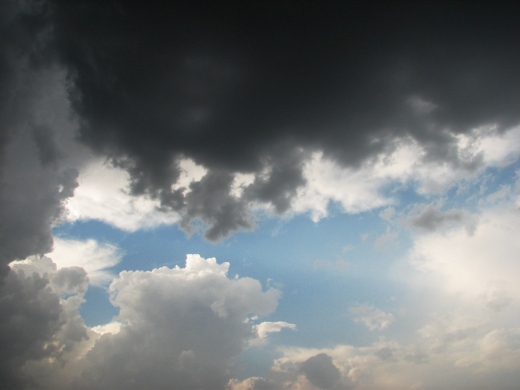
In the afternoon sullen thunder began in the North-west, where clouds had all day been gathering in towering piles. As they thundered the clouds moved slowly down across the North Konkan, and about four o’clock gathered against the jagged crest of Bava Malang. To the North, and all along the Bava Malang range the sky and land were filled with lurid clouds, thunder lightning, and rain, the Kalyan river flowing back as ink through a scene of the most striking – desolation and gloom, South of this abrupt line of storm, the country from Bombay to Khandala was full of pure calm light. Every village, every hut, every road and forest-track, even the bridge over the river at Chauk, came clearly into view. The trees and groves looked magically green; and the light picked out the most hidden streams and burnished them into threads of molten silver. The Panvel and Nagothana rivers shone like mirrors, and the sea was scored with bars of vivid sunshine. Suddenly at about five, the storm-rack poured over Bava Malang like a tumultuous sea, and swept into the deep valley between Matheran and Prabal with furious blasts and torrents, awful thunder, and flashes of forked lightning. When the clouds had filled the valley, the rain and wind ceased and the storm stood still, and, in dead stillness, the thunder and lightning raged without ceasing for an hour. The thunder mostly rolled from end to end of the valley, but it sometimes burst with a crash fit to loosen the bonds of the hills. At six o’clock the storm again moved and passed slowly south over Prabal towards Nagothana. Another enchanting scene opened in the South. Every hut, tree and stream grew strangely clear, the rain-filled rice fields and rivers flashed like steel, while fleecy clouds lay on every hillock and slowly crept up every ravine. As the sun set behind Bombay the air was filled with soft golden light. Westwards towards Thana the hill-tops were bright with every hue from golden light to deep purple shadow, while, among them, the winding Ulhas shone like links of burnished gold. Then, the moon rose, brightened the mists which had gathered out of the ravines and off the hills, and cleared a way across the calm heavens, while far in the south the black embattled storm-rack belched flame and thunder the whole night long. The next day (Tuesday) passed without a storm. On Wednesday, the 8th, eastwards towards Khandala vast electric cloud banks, began to gather. At two in the afternoon, with mutterings of thunder, the sky grew suddenly black and lurid. At half-past two the storm passed west moving straight on Matheran. A mist went before the storm, thickening as it came, first into trailing clouds and then into dripping rain, with muttering thunder all the while. At three the valley between Matheran and Prabal was filled with storm. Thunder rolled in long echoing peals, and flashes lightened the dense fog with extraordinary splendour. The fog lasted with heavy rain till 3-45, when a light wind swept it west towards Bombay, where about four the monsoon burst. These appalling electric outbursts end serenely. The storm clouds retreat like a drove of bellowing bulls and their last echoes die beyond the distant hills. The sun shines again in majesty, in every dell the delicious sound of running water wakens life, and the woods are vocal with the glad song of birds.
London Times, Jan. 1880
Apud Bombay Gazetteer Vol. XIV pp. 247-248,
Monsoon Cometh..
Now that Some parts of India are experiencing a heat-wave, people are looking forward to coming of the monsoons. Which mark an end to the annual saga of heat. This post has some descriptions by a British of how coming of the monsoon is experienced in Bombay.
This is from The Charm of Bombay, an anthology of writings in praise of the first city in India (1915) edited by Rustomji Pestonji Karkaria 1869-1919.

BURST OF THE MONSOON.
Henry Moses
The day at length arrives when the windows of heaven are to be opened, and man’s anxious doubts and fears are to be dispelled by this gracious provision for his wants. Dark clouds towards noon, gather in the south-west, and gradually steal over the azure firmament, casting a gloomy shadow upon the earth, and obscuring the intensity of the sun’s rays as they flit over his surface in their onward progress. A current of cool, strange air now denotes some remarkable atmospheric change. The ocean is unusually agitated; the waves are lifted up hurried onwards as the breeze increases — the angry waters come foaming and roaring towards the shore, and are broken with violence upon the rock ; receding but to break again with redoubled force. Distant peals of thunder echo among the lofty Ghauts far down the coast, and vivid streams of forked lightning illumine their peaked summits. The dry leaves of the lofty palms rattle overhead, and the forests are agitated and shaken as the hurricane roars through their solemn vistas, and breaks in upon their profound stillness. The soaring kite flaps his outstretched wings, as he rises alarmed from his lone perch, and is hurried away upon the storm. The cattle on the plains congregate together, as if driven by some irresistible impulse to seek the shelter and protection of each other, and lie down with their heads close to the earth, as if conscious of approaching danger; and the poor Hindoo wraps his muslin kummerband tighter around him, as the cool air expands its many folds, and exposes his delicately formed limbs to the chilly blast. The skies become darkened, and sheets of blazing lightning, followed up by the roar of deafening thunder, succeed each other with fearful rapidity; and, though in broad day, the eye can scarcely bear to look upon the flaming heavens, so in- tense is their brightness.
The elements are indeed at war. Large drops of rain begin to fall ; and falling, raise up, in consequence of their weight, a cloud of dust ; and then, within a brief space, the mighty clouds descend upon the thirsty land. The tempest is terrific to behold, and man trembles beneath the storm. He seeks in haste the shelter of his mud- built cabin, and mutters a hurried prayer to the stone idol which he has set up. The high houses in the Fort of Bombay vibrate with every clap of thunder; doors and windows, and walls and floors are shaken by the loud artillery of heaven. Torrents of water pour down from every roof, and bound over, in broken streams, the sounding verandahs below them, sweeping the various streets as the flood rushes onward, laden with mud and rubbish, towards the sea.
To those persons who have but just arrived in the country, and who, having never experienced the setting in of this remarkable season, have formed from description but an imperfect idea of that change, the scene is pregnant with horror of every kind. The newly-arrived Englishwoman in particular suffers exceedingly at this period, being scarcely able to divest herself of the impression, that everything around her is about to be destroyed or washed away; yet it is very seldom that accidents occur or that property is seriously injured. Occasionally we hear of exposed houses being struck by lightning on the Island, of old palm trees blown down, and of leaf roofs being dispersed to the four winds of heaven ; for woe be unto him who lives in a bungalow with a bad roof, or in one whose spouts are out of order; but with these exceptions, Europeans on shore have but little to be alarmed about for their personal safety.
Myriads of mosquitoes, now driven in by the rains, fill your apartments; and your lamps at night, if not properly covered over with a glass shade, are liable to be suddenly extinguished by the large green beetles that have sought shelter from the storm without. Flying bugs almost poison you with their fetid effluvia, and contaminate every article of food upon which they may chance to alight. The musk weasels dart in under your China matting, and find their way into your wine-cellars, and every cork they touchy every bottle they spoil. That nimble and really useful reptile, the house lizard, climbs your walls in all directions, and comes out so regularly frorrt under your table after dinner, to feed upon the flies attracted thither, that you quite look for the active little creature as a matter of course, to amuse you during dessert time; and if he fail to appear, express regret, as I have heard an old gentleman do, at its non-arrival. The loathsome centipede gets into your cooking-houses, and hideous spiders, with hairy bodies and long legs takeup their quarters in every available corner and door-way They are not content with staying; at home quietly like our own respectable, though small species, and of taking their chance of what may be sent them ; but they must make daily tours all over the establishment, as if it were expected that they should pay visits to one another, now that the season had brought them into town. In fact, all the. entomological tormentors of India appear to have a design upon your house and happiness. A continual buzzing is kept up a- round you day and night. Ants creep up your legs, while fleas irritate your body; and farewell to sleep, if your gauze curtains display any rents at bed-time. The punkahs or swinging fans suspended in your rooms, now have rest from their labours, for the atmosphere is sufficiently cool without any artificial currents of air. The sweet-scented cuscus mats, or tatties, hung outside between the pillars that support your verandah, and kept wet, in order to lower the temperature of the heated breeze before it enters your house, are now taken down and laid aside; and quite a change takes place in all your little plans within doors.
Sketches of India, 1850, pages 84-88.

Déjà vu of déjà vu
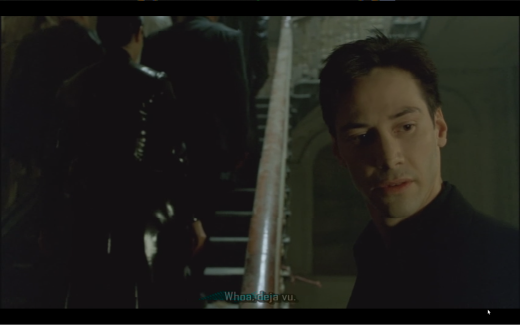
I was introduced to the term déjà vu from The Matrix. This is how the scene unfolds:

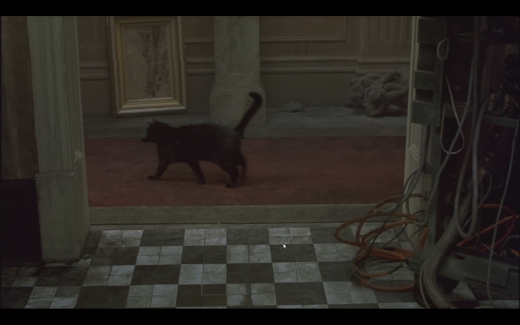
[Neo sees a black cat walk by them, and then a similar black cat walk by them just like the first one]
Neo: Whoa. Déjà vu.
[Everyone freezes right in their tracks]
Trinity: What did you just say?
Neo: Nothing. Just had a little déjà vu.
Trinity: What did you see?
Cypher: What happened?
Neo: A black cat went past us, and then another that looked just like it.
Trinity: How much like it? Was it the same cat?
Neo: It might have been. I’m not sure.
Morpheus: Switch! Apoc!
Neo: What is it?
Trinity: A déjà vu is usually a glitch in the Matrix. It happens when they change something.

Now let us leave The Matrix for now and enter the real world. I mean our world, and I am not Morpheus. We had a lot of issues with the quandrangular cat recently at my working place. Now don’t ask what a quandrangular cat is? If you don’t know already, you don’t need to know. Remember, in the first approximation the cow is a spherical object.

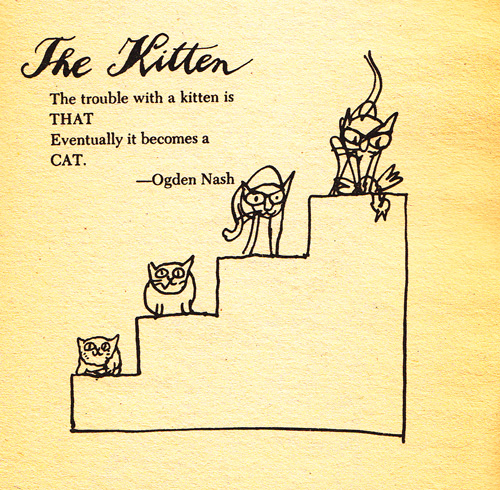
Circa, a few months back we had a sorry looking undomesticated cat, who was domesticated, nursed back to health, and attained zen (if you don’t believe me see the picture above (Picture Credits: Rafikh)). This was only possible by the warmth of many people’s affections and efforts. But unfortunately the cat overstayed, unwelcomed by some, on GoI property (without paying any taxes!) which wrecked havoc and created a red alert. To further complicate the matters, we could not for sure determine if the cat was a he or a she! The presence of cat in the campus was as good as an extinction event, extinction of one’s peace of mind and good vibes. that is. This called for extreme measures to show cat (and the ailurophiles ) their respective places. The entire drama was just short of executing the cat (and the ailurophiles ) in public. The cat was sent into exile, and if the reports coming in believed to be true, even there it is creating extinction events!
Now. Yesterday, déjà vu ! I see a similar cat in the same place approaching me similarly, well not almost as same as Neo’s black cat but quite similar. And I almost said as Neo does, (but I am neither Neo) “déjà vu!” First thing I thought was the déjà vu in The Matrix. But then this is a déjà vu of déjà vu, and cats are involved in both of them. What is it with cats and déjà vu? Déjà vu recursive, nothing more groovier than that! Four cats in all. The newer cat, which caused the current déjà vu , was smaller and in sorrier state and also approached me on the same table as earlier one. Unfortunately, I do not have a picture of the newer cat for comparison. Will this create another leela (pun intended), which would be another déjà vu for both ailurophiles and ailurophobes? Actually if semantics of earlier sentence are seen, then we come to conclusion that leela and déjà vu are same 😛

Now it remains to be seen what has changed in The Matrix.
PS: This new cat seems to have set the ball rolling, it is already making people uncomfortable, causing extinction events!
From or with?
My place was not with the heroes, but with the rablle, with the men who had been pressed into the ranks by force of arms, or force of hunger, with nothing to fight or work for and little to gain; whose function in the epics was to be slaughtered by the heroes; whose role, according to the historians, was to provide a mere background for the deeds of great men. The heroes of a money-making society rose from the people, at the expense of the people; I could rise only with the common people.
D. D. Kosambi | The Kanpur Road | Exasperating Essays
Radical Openness – Scientific Research
“The more we’re getting into this the more it’s apparent this is a radical new way to scientific research. Traditional research is done in an institution with patent protection. IP protection and patents slows progress because it reduces collaboration and makes it harder to build on the work of others. Our project, we don’t have a central body. It’s the public, they’re the ones who get excited. Because we’re not beholden to shareholders we can create a community.”
via Glowing Plant| Singularity Hub.
I just hope that this project is successful and will create a new way of doing scientific research which will involve common people.