
Arbeit Macht Frei – Work sets you free

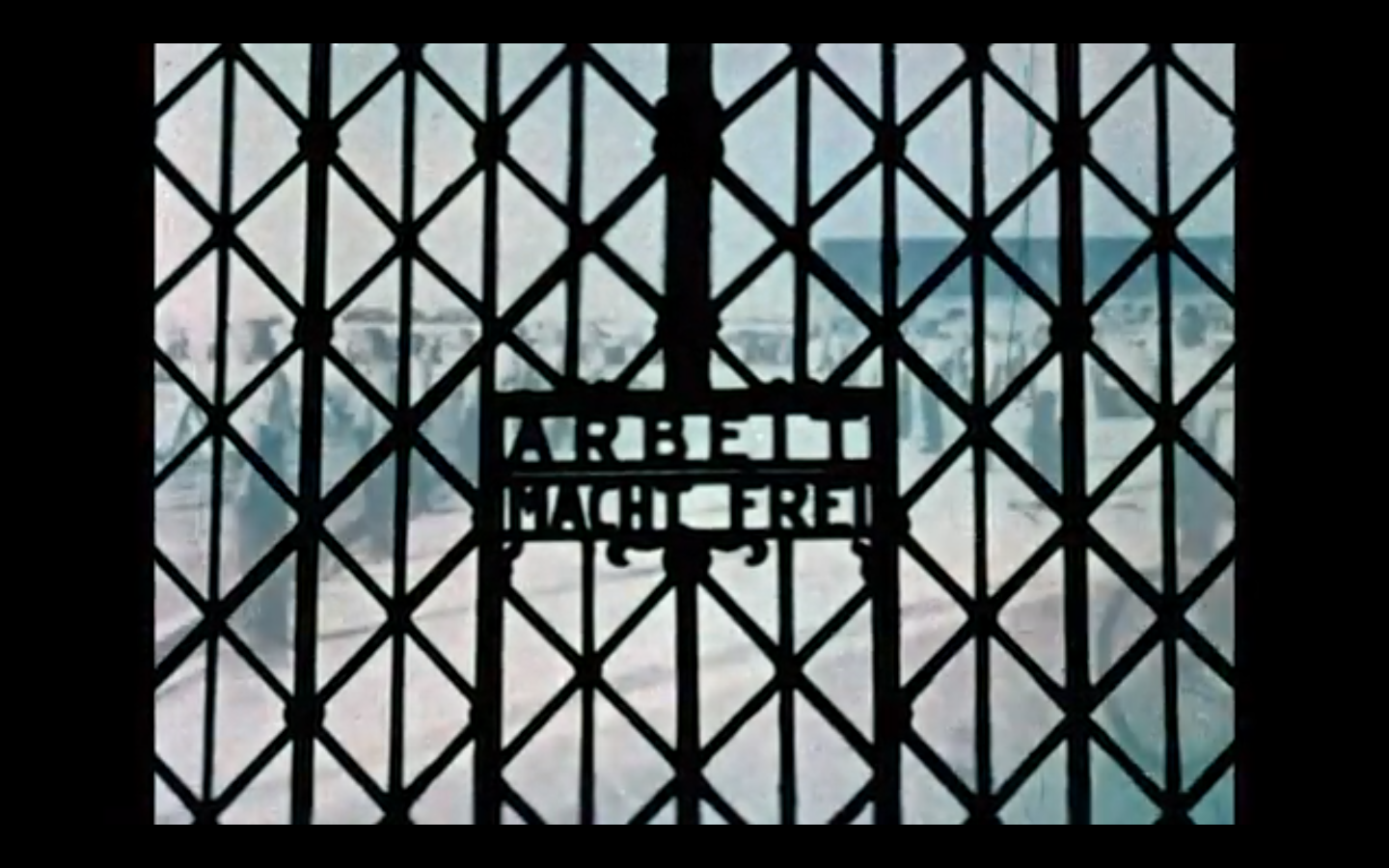
Arbeit Macht Frei – Work sets you free

Screenshot 2019-11-13 at 10.51.14 AM.png

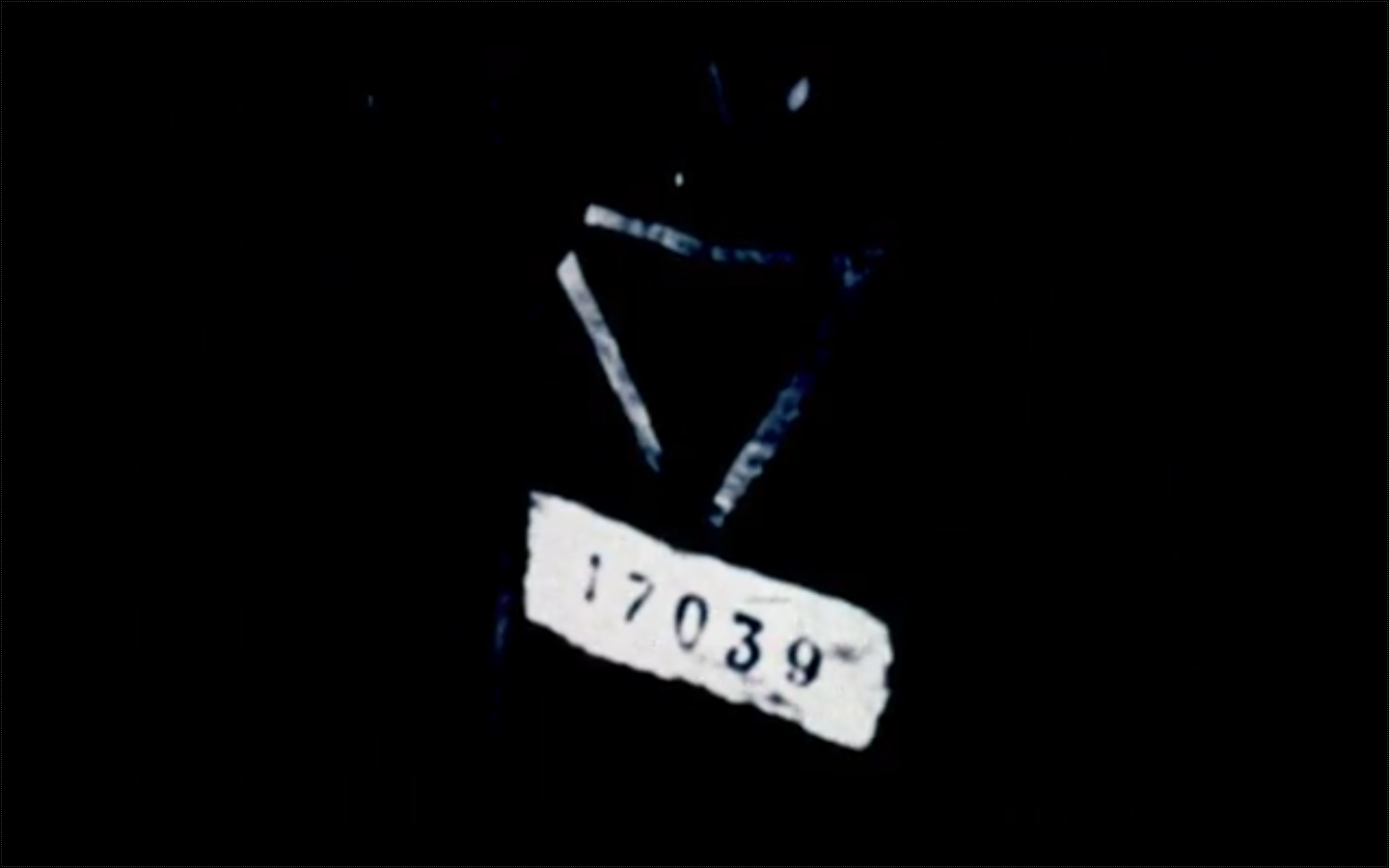
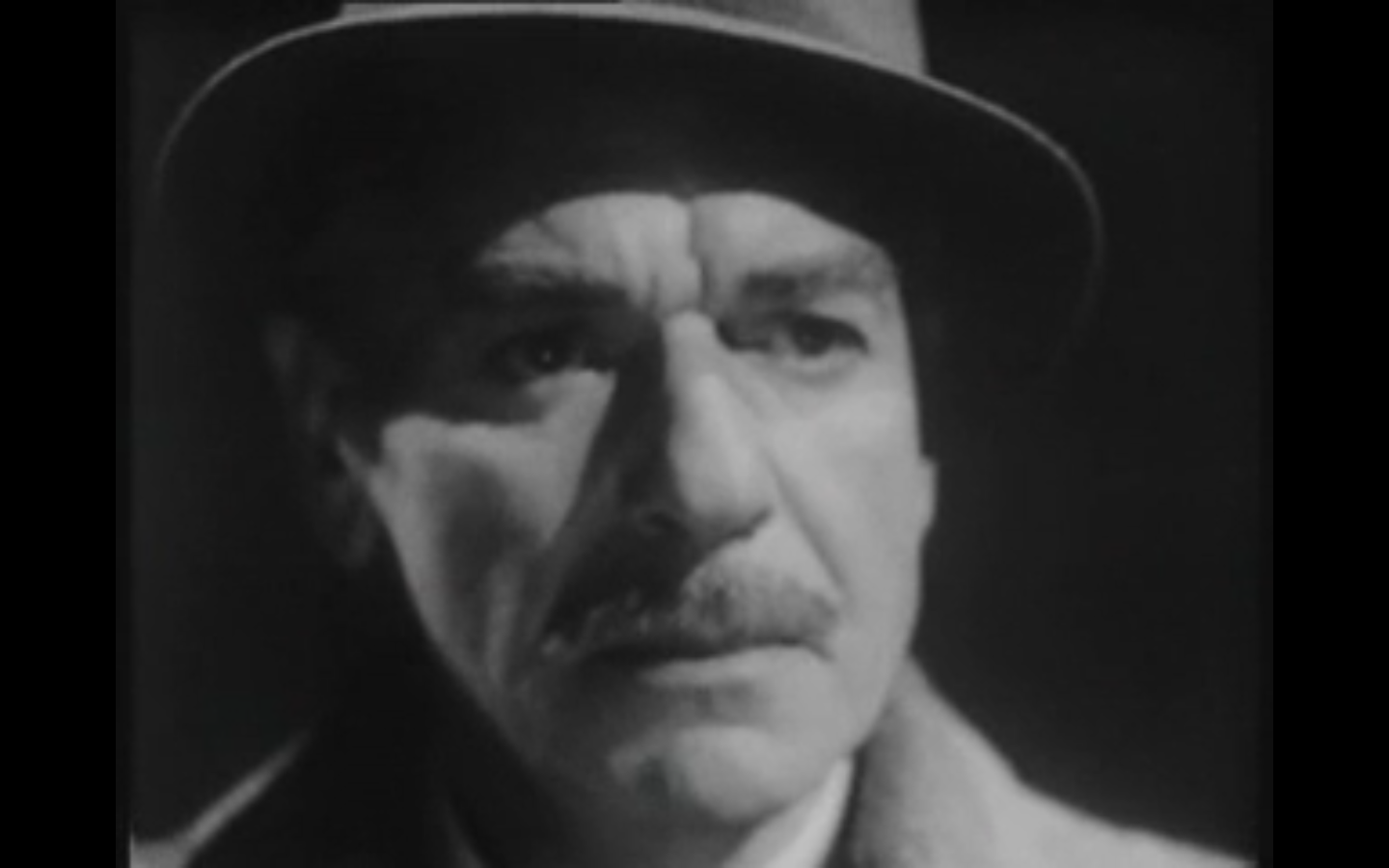
On the gate of Dachau, a model concentration camp. The SS were Hitler’s instrument of terror in the creation of the new order. It was only logical that they should run the camps. Their first prisoners were the dissidents of the Nazi state, political and religious as well as racial. The SS schooled themselves in brutality, systematically reducing their victims to total subservience. Depriving them of individuality, no names, numbers.

 – The World At War – Episode 20:  Genocide

We are also close to become a society in which we will not have a name but only a number might become our identity. There were even suggestions by the mahanubhav who spearheaded this project that we should get this number tattoed on hands lest we forget it. Why not barcode or QR code, so that is easily machine-readable too?
Screenshot 2019-11-13 at 2.28.46 PM.png
Also, we are making detention camps for people who are not able to prove that they are indeed Indian citizens, a classic case of creating and identifying the other. Ironically, the  detention camps are being built by those who will be detained there, just as in the concentration camps. Too many parallels. History repeats itself. 

Quatermass and The Pit

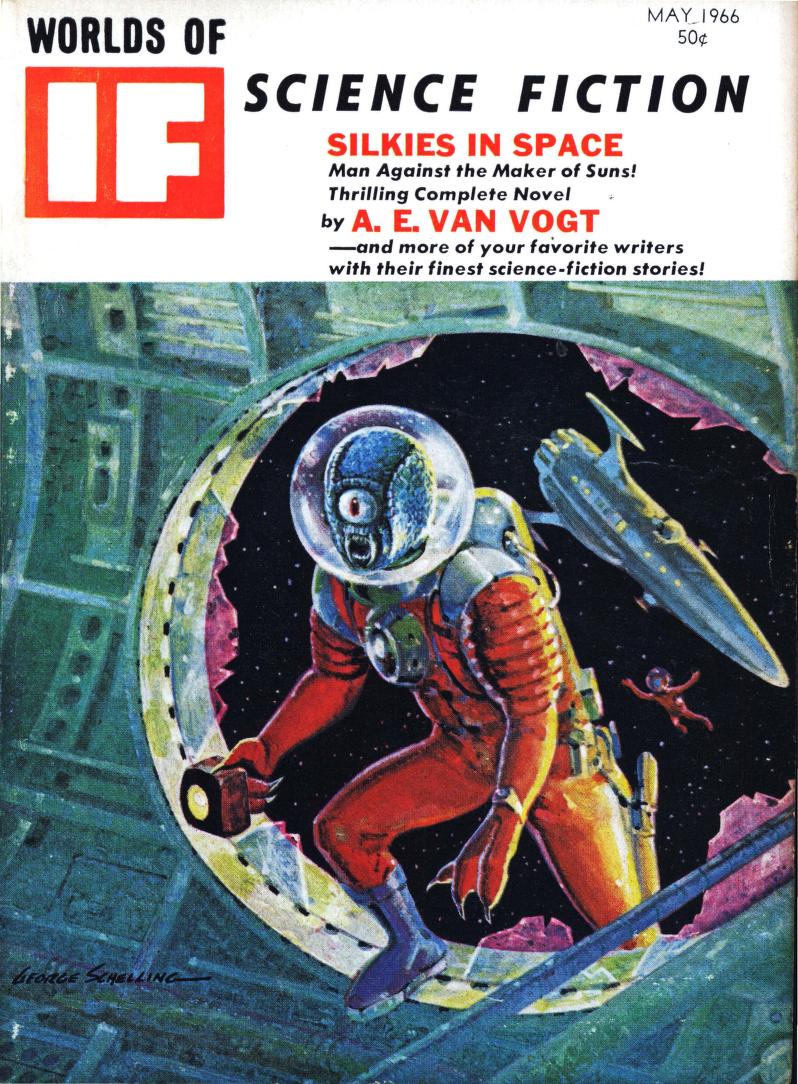
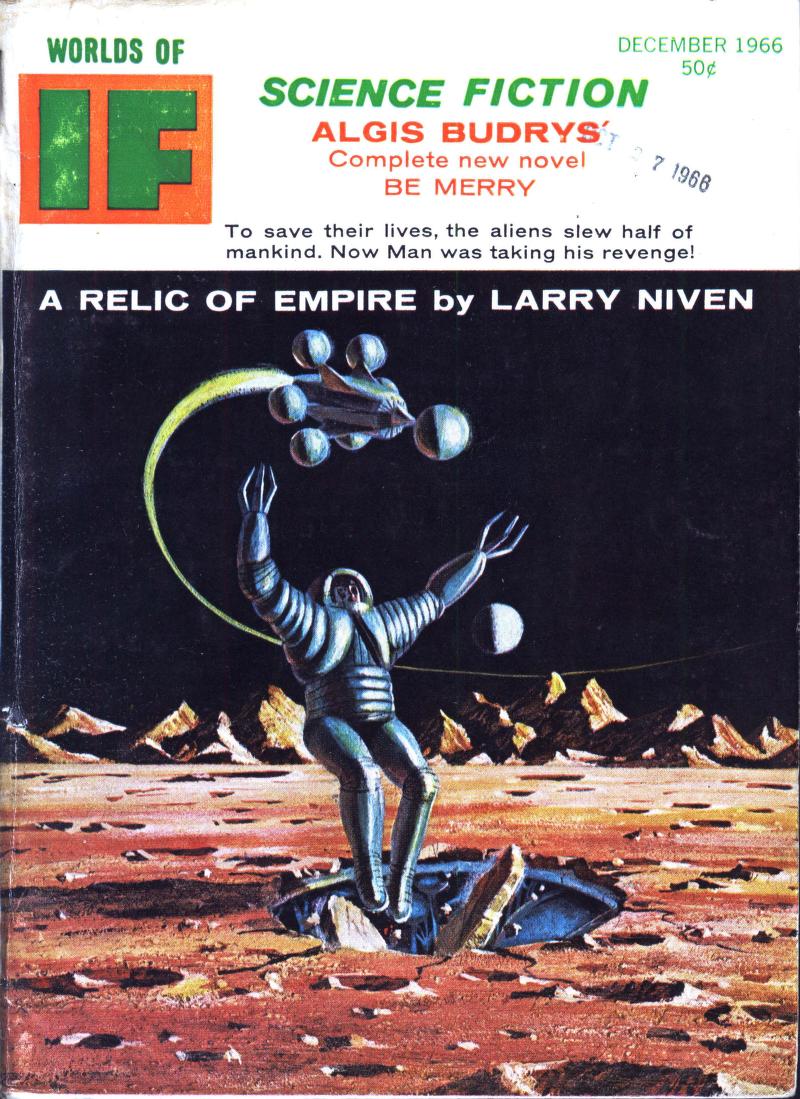
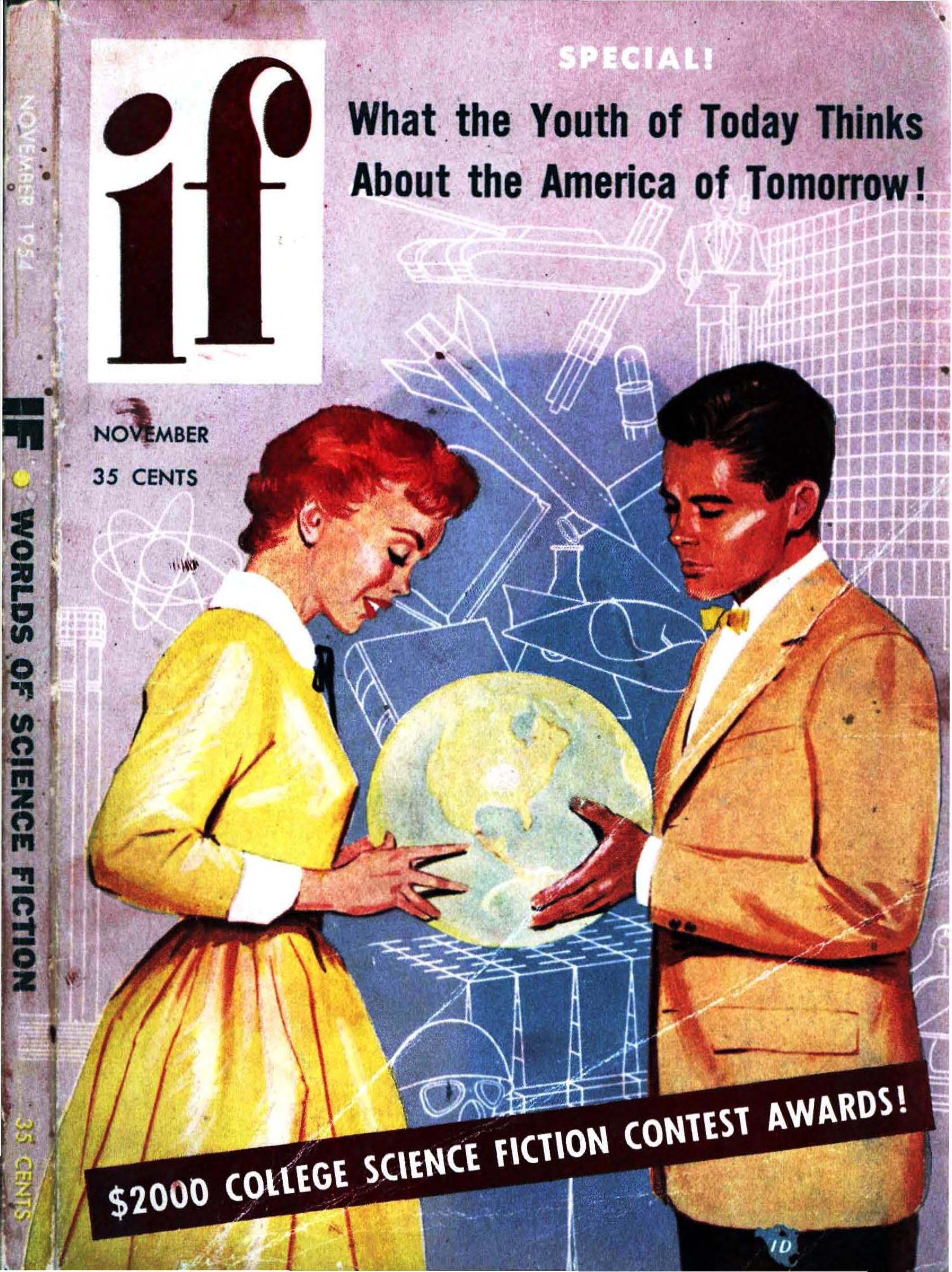
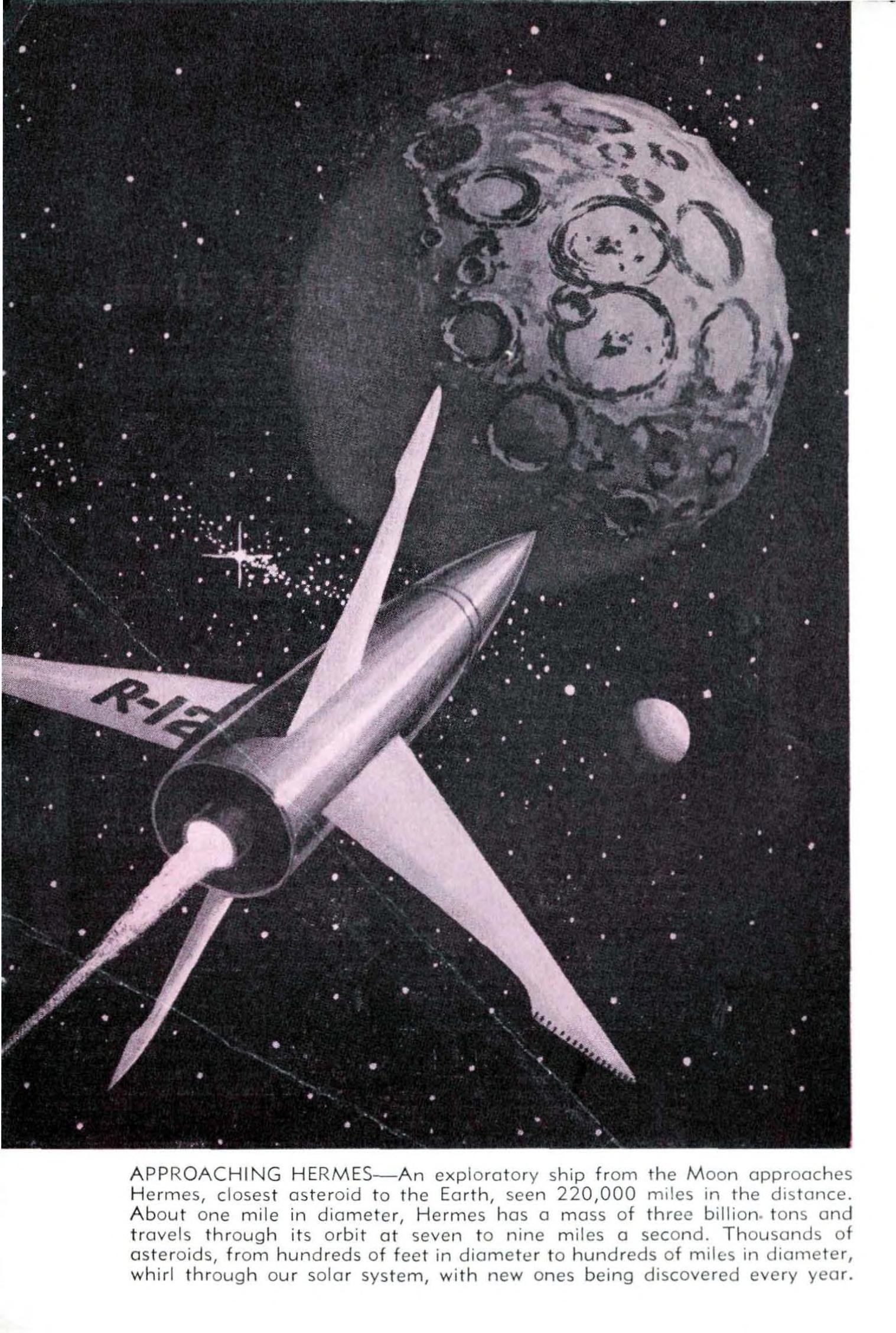
One of my favourite genres of literature is science fiction. Two of the classic science fiction authors at the start of the previous century were H. G. Wells, Edgar Rice Burroughs and Jules Verne. The golden era of science fiction began in late 1930s and 1940s and flourished in the post-war era, which saw the big three (Issac Asimov, Arthur C. Clarke, and Robert Heinlein) along with many others bring out their finest.  Some of the other remarkable authors from that era include (my personal preference, and by no means a representative list) Ray Bradbury, Philip K. Dick, Stanisław Lem, Frank Herbert, Ursula K. Le Guin, and Kurt Vonnegut. Though novels were there, the mass format was the pulp science fiction magazines which published short or serialised stories from various authors. Many of the famous novels were first published as short stories in these pulp magazines. A selection of them with fantastic full-colour covers and some with black and white illustrations on the inside. Some of the prominent titles that come up are Amazing Stories, Astounding Science Fiction, Worlds of IF, Galaxy Science fiction among others.


The post-war era was an era where people believed that we will have permanent bases on the Moon by end of the 20th century and space travel would be commonplace. But we now know, it will be perhaps a few decades if not centuries for space travel to become common. The optimism in the 50s and 60s perhaps was fuelled by the cold war space race, which saw both the West and Soviets invest huge sums to research and development in developing space technologies. This optimism gradually waned as the Soviet empire fell.
With television becoming the newest technology to reach out to the audience, it is not surprising that many of the programmes were tuned to science fiction. I happened to stumble upon one such programmes while scanning the treasures at The Internet Archive. This was a British production titled Quatermass and The Pit created by Nigel Kneale. This is third in a series of Quatermass episodes.

Warning: Spoilers ahead


The six-part television series from 1958 (each episode is 30-35 minutes) is set in post-war London at Hobbs lane where during an excavation for a building some fossil skulls are discovered.  Dr. Matthew Roney, a paleontologist from a nearby museum begins to investigate the discovery. The fossil skulls and subsequent bones are found to be a new previously unknown dwarf hominid species, perhaps the missing link and are dated to roughly 5 MYA. Roney’s head assistant Barbara Judd, creates a reconstruction of the species which is present to the press.
Screenshot 2019-11-09 at 2.00.43 PM
Soon after, when they continue digging a strange smooth object is found in the pit. The object resembles an unexploded World War II-era bomb and police and subsequently, the military is contacted for its safe disposal.
 
The bomb disposal squad works slowly and does not care about the archaeological aspects of the pit. This makes Roney impatient, who then contacts his experimental physicist friend Prof. Bernard Quatermass to hasten the disposal of the bomb disposal squad.
Screenshot 2019-11-09 at 2.56.47 PM.png
Quartermass is involved in rocket research, which he intends to use for peaceful purposes. And this creates a rift between him and the military personnel he is working with. This has some moral and ethical implications for the purpose of scientific research and whether the scientists are responsible for their research being used for military purposes. The military intends to develop bases on the Moon and Mars in order to achieve supremacy in space which is against the principles of Quatermass.
Screenshot 2019-11-13 at 1.05.53 PM.png
Quatermass and Colonel Breen visit the site in order to look at the discovery. When the supposed bomb is excavated deeper more fossils are found and the true shape of the artefact is revealed. And it turns out that the artefact cannot be cut by gas cutter, even after raising the temperature to order of 3000 degrees.
Screenshot 2019-11-13 at 12.56.32 PM
Further digging, provides a disk and an opening to the artefact. Soon, the shape of the complete artefact is revealed. Rest of the hollow space is emptied out, yet the hull of the artefact remains close shut. There is a pentacle on the smooth inner surface of the hull.
Screenshot 2019-11-13 at 1.21.28 PM.png
From the outside, the artefact looks like a rocket, which leads Breen to speculate that it is indeed a German rocket which fell here during the war. Also, traces of artificial radioactivity are found in the soil, which indicates that the artefact might be propelled by a nuclear engine. But Quatermass taking into account the age of the fossils speculates that the artefact itself might be of ancient origin. One of the bomb-disposal unit member has a strange hallucinating experience inside the artefact. He sees a dwarf-like figure pass through the walls.
Screenshot 2019-11-13 at 1.14.53 PM
To open the hull, they try to drill it with a borazon boron nitride drill which makes no impact. But the action of the drills sets out weird vibrations which make everyone frightened and uneasy.
Screenshot 2019-11-13 at 1.17.35 PM.png
Everyone is in a state of panic after this. Quatermass, Roney, and Judd run a parallel investigation after hearing out an old local couple about the neigbouring house being haunted. They dig older records and find episodes of haunting dating back till 1300s through to the present. For Quatermass and Roney this is too much of a coincidence and they begin to speculate about the ancient origins of the artefact.
Just after the drilling, a hole automatically appears in the pentacled hull. Roney looks inside and sees what seems like an eye. They force open the hull and find three insects inside the hull who are decaying.
Screenshot 2019-11-13 at 1.20.28 PM.png
Roney immediately tries to stop the decay and preserves the specimens and takes them to the museum. They are unlike any insects known and are tripods. Quatermass and Roney speculate the extra-terrestrial origin of these insects, most probably from Mars.
When the drill operator is taking out his equipment, he triggers more poltergeist activity from the artefact and sets a panic across the street. He finally lands in a church in a state of delirium. He describes to Roney and Quatermass hallucinating visions of the insects found in the artefact killing each other.
Screenshot 2019-11-10 at 1.10.54 PM.png
Screenshot 2019-11-10 at 2.53.13 PM.png
Like good scientists, they further investigate the visions using a Roney’s optic-encephalogram, a device that records impressions from the optical centers of the brain. It turns out Judd is the most sensitive of the lot to these visions and they record them. The visions show large-scale culling of the mutations of insects. Seeing these recordings as a “proof” of their theory of extra-terrestrial origins of the artefact. This evidence along with his theory is presented to the military brass. The theory is ridiculed as a fantasy, and a common-sense approach that artefact and the insects being propaganda from Nazi Germany is preferred. They want to dispel the myth that the artefact is that old or it is indeed extra-terrestrial.
The theory as developed by Quatermass is as follows taking into account the evidence he has:
The Martian race of insects is selected to weed out any mutants. So there is a tendency to have large scale purges, which are seen in the hallucinations of people. The Martians came here 5 MYA, and tried to genetically re-programme our ancestors in their own image. During this reprogramming, the human ancestors were given telepathytelekinesis and other psychic powers. And they were set back to Earth. The artefact found was one such space-ship which crashed while bringing modified hominids back to the Earth. Now in the vicinity of the space-ship, some of these long-forgotten powers are awakened. The spaceship itself induces the visions and poltergeist phenomena seen when the ground near the ship was disturbed. Quatermass fears that a large scale activation of such powers might lead to mass killings of humans as seen in the hallucinations.
Screenshot 2019-11-10 at 2.57.22 PM
A media event is organised in order to address this once and for all. Quatermass pleads that this event must be stopped but in vain. Just as the live event is about to start, the power cables in the vicinity of the artefact, activates it fully. This sets chaos about everywhere and people are trying to kill each other. Somehow Quatermass comes out and is saved by Roney. Entire London is seen to be under mass panic and people killing each other and destroying things.
I will stop here and won’t ruin the climax for you.
You can watch the entire series at The Internet Archive

Episode One “The Halfmen” 

Episode Two “The Ghosts”
Episode Three “Imps and Demons”
Episode Four “The Enchanted”
Episode Five “The Wild Hunt”
Episode Six “‘Hob'”

Some reflections (as seen by a reader from 21st century):
The easy flow of information and relatively free access to the press seem to be unrealistic. For example, one of the reporters gets in easily and takes photos at will of the pit, the artefact and insects. In fact, even after the mysterious nature of the artefact is made known, no attempt at hiding it from the public is done. This is perhaps due to the fact that the military brass firmly believes it to be WW II era find, yet even in this case the free access to press is questionable.
The other aspect is the depth of the characters, which are frankly speaking one dimensional. But perhaps this is keeping in mind the general state of science fiction from that era. Most of the stories, films were like this which did not involve multiple levels of the plot. For example, another fantastic TV series from the era The Twilight Zone (1959) has similar storylines. The acting also looks over the top at times (not at all subtle at any point really), but perhaps this is again a reflection of that era and influence of theatre on films.
Quatermass, like a good scientist, considers evidence from the pit itself (the artefact with seemingly advanced technology, the alien bodies, the 5 MYA fossils), and from people (the visions, and the hallucinations, the elder couple who tell about haunting in the area) and historical records. The evidence of the artefact being old, is right there from the beginning, yet it takes Quatermass and others a long time to consider extraterrestrial origin. Perhaps, we, as readers in the current age, are more agreeable to such a possibility, hence we may find it a bit naive. But then we are trying to judge a production from another era with standards of another.
Some of the themes could be considered on a deeper level. For example, how does evidence from evolutionary aspects corresponds to this explaining? We can perhaps develop another story which takes this forward…
 

Technologies in the classroom

ict-satellite-education
How to modernise education? How to make use of new technological developments that are around us to make learning in schools better? These are some of the questions that we will look at in the current post. In particular, we will be looking at the so-called satellite education as being implemented in some schools.
In many discussions regarding education, the teachers are usually blamed for not doing their assigned jobs correctly. There is some truth in these accusations. Having worked with teachers at different levels (primary to university) and in different settings (govt schools, private elite schools, teacher training institutes, colleges, and universities) I have come to the conclusion that teachers are part of the problem. This will be elaborated in another post and before you draw out your pitchforks the disclaimer: of course there are good teachers, who do their jobs well.
So one of the solutions is to take these good teachers to all the classrooms. Of course, it cannot be done in a physical way. This is where the technological advance pitches in. We take the good teachers to classrooms via satellites. The TV in the classroom becomes the blackboard, which allows the students to get the best of experiences that the system can offer. Now, this is not just limited to schools but also colleges, some of the best institutes in the country are offering “distance-education” courses like this. The government has invested a large sum in higher education in the form of Swayam channels. These channels are running lectures by various faculties of institutes across India 24×7. Mind you most of these are not specially produced lectures for the TV, they are recordings of usual lectures that these faculties give to their classes. Most are boring af, with them reading out the powerless-pointless slides one after other. They cram as much text as possible on these slides. Making them dense in terms of ink ratio, but unfathomable in terms of learning from them. Anyways this is a subject for another post.

Imagination and philosophies

Our sense of imagination is limited by what we know, and the
philosophies that we subscribe to. For some, it is clear about what their assumptions are for others it is not. They think that this is how it should be, completely ignorant of the notion that some of their concepts are based on assumptions. For some people, this is something that they are aware of, for most of us, we are not aware of this. Many
times we think of finding solace in things which are traditional. Since it has stood the test of time, it must have some inherent value they say. It is our ignorance and arrogance that we are not seeing any value in it. Hence people resist change. Why try something new which might or might work, or work equally well when we have something which is tried and tested? Of course, stability is important, but then stability does not lead to change. Yet when people change things, they try to replicate the models that they have found to work, and hence reducing the risk.
If we apply the same idea with regards to education, we also come across many such examples. The satellite television used in the classroom is one such case. The idea is not new. As soon as television technology became commonly feasible in the 50s and 60s, immediately some pedagogues of the era jumped to the idea of using them for education. This ideally suited the “transmission model” of education which was in vogue at that time with behaviorism ruling the roost of psychology in general and education in particular. In a way, learning via television is the ultimate epitome of the transmission model. In a regular classroom, there is at least a scope for the teacher and student to interact. But in this case, the entire flow of information is in one direction. The transmission is the transmission of learning. No wonder for many decades, and even now television was seen as a game-changer and harbinger of technological learning. Television was also seen as non-invasive technology, as it is passive which works for everyone involved, except perhaps for the most important stakeholders the learner. The television didn’t and doesn’t challenge the traditional “transmission model” of education, which most teachers and stakeholders (including parents) do believe in. The values which enlightened pedagogues worship, find a very low priority with most other stakeholders.

The central mindset in education

The term “centralised mindset” refers to the idea that in complex systems there has to be a controlling agent who overseas all executions.  The centralised mindset refers to a belief that any system which works well must have a system or authority (in the form of a person or a group) which must somehow control the mechanism. The belief in the centralised mindset is that the individuals in a complex system are too unintelligent to behave in a coordinated, complex manner. For example, for a long time, it was believed that the “V” formation that one sees in the flying birds is due to a “leader” in the group. This supposed leader will make the group fall in the “V” patterns by organising the other group members. This is a very intuitive model that appeals to common sense. Whenever we see some patterns, we assume there must be an inherent design or a designer. In the case of the birds in “V” shape the same logic applies. There must be a leader who makes sure such a pattern is created. But such a view, however intuitive and correct it may seem is incorrect. As it happens with most of the other principles in science, in this case too the correct explanation is counter-intuitive. There is no leader in the case of the birds. The “V” pattern that we see is an example of what is known as an emergent phenomenon. It arises from the interaction of the birds which are flying together. When all the individuals follow simple rules in interacting with their neighbours, the “V” pattern emerges. The people who believe in a central leader are wrong in this case. It is a fiction that makes things that we observe easy to accept. But it is not correct. For many such examples and deeper discussions, see Turtles, Termites, and Traffic Jams by Mitchel Resnick.
There are several natural and artificial phenomena where earlier we (including the experts who propose such explanations) though that there was a central control involved in creating patterns, but in most cases, we have discovered otherwise. The counter-intuitive explanation that there is no central control or mechanism just doesn’t appeal to people. How can it be that there is no central control and yet the thing works on its own? Do we always need a centralised control? People argue that without a centralised control there will be chaos or anarchy. Stable patterns of behaviour or observations cannot emerge, it is assumed if there is no central control. Examples are given of a central governing that we are used to so much.
Now you might be wondering what has this to do with education? The general bureaucracy in the educational field is seen as centralised. For example, the creation of a textbook or syllabus or curriculum and assessment is always a centralised process. Think of the board exams.

Why cannot a school or a teacher decide upon textbooks and curriculum?

Why this is so? Because that is how it was in the other government departments. This is what the tradition says. A bunch of experts (preferably with a prefix of a Dr. or Prof.) will decide for everyone what they should learn and more importantly how they should learn it and most importantly how will this learning be assessed. This triumvirate or what to learn, how to learn and how to assess is assumed to be too complex and too important to be left to the plebs. This is where centralised mindset in the form of centralised expert committees is brought in.
The power of the teacher in the classroom is reduced to
a mere executioner ( a meek dictator if you will, as per Krishna Kumar) of all the algorithms set for them to follow. Some good teachers would improvise on this little elbow room that the classroom did offer. But now in an effort to make it
more central in discourse and execution, a centralised teacher and
teaching is needed. Indeed this is the idea behind the satellite television in the
classrooms. To ensure that quality (standardised) education reaches all learners. This also reduces the load on the local teachers, who just have to shepherd the learners to the AV room, and their job is done. The parents are happy as their children are supposed to be learning from the best teacher. And this happens live in some cases, I witnessed this entire process in Rajasthan. Seeing it from the studio being recorded and transmitted live via the satellite, and also saw (at another time) how it is received and executed in the schools. In some cases for interactivity and feedback, a Whatsapp number is provided where the teachers or the learners can reach out to the teacher in the studio. This teacher at the studio genuinely believed that he was being helpful to the students and the system worked. The proof for this was not some study but the messages he received from the school teachers thanking him for taking their class. Real interactivity which might happen in an actual classroom was found to be missing.
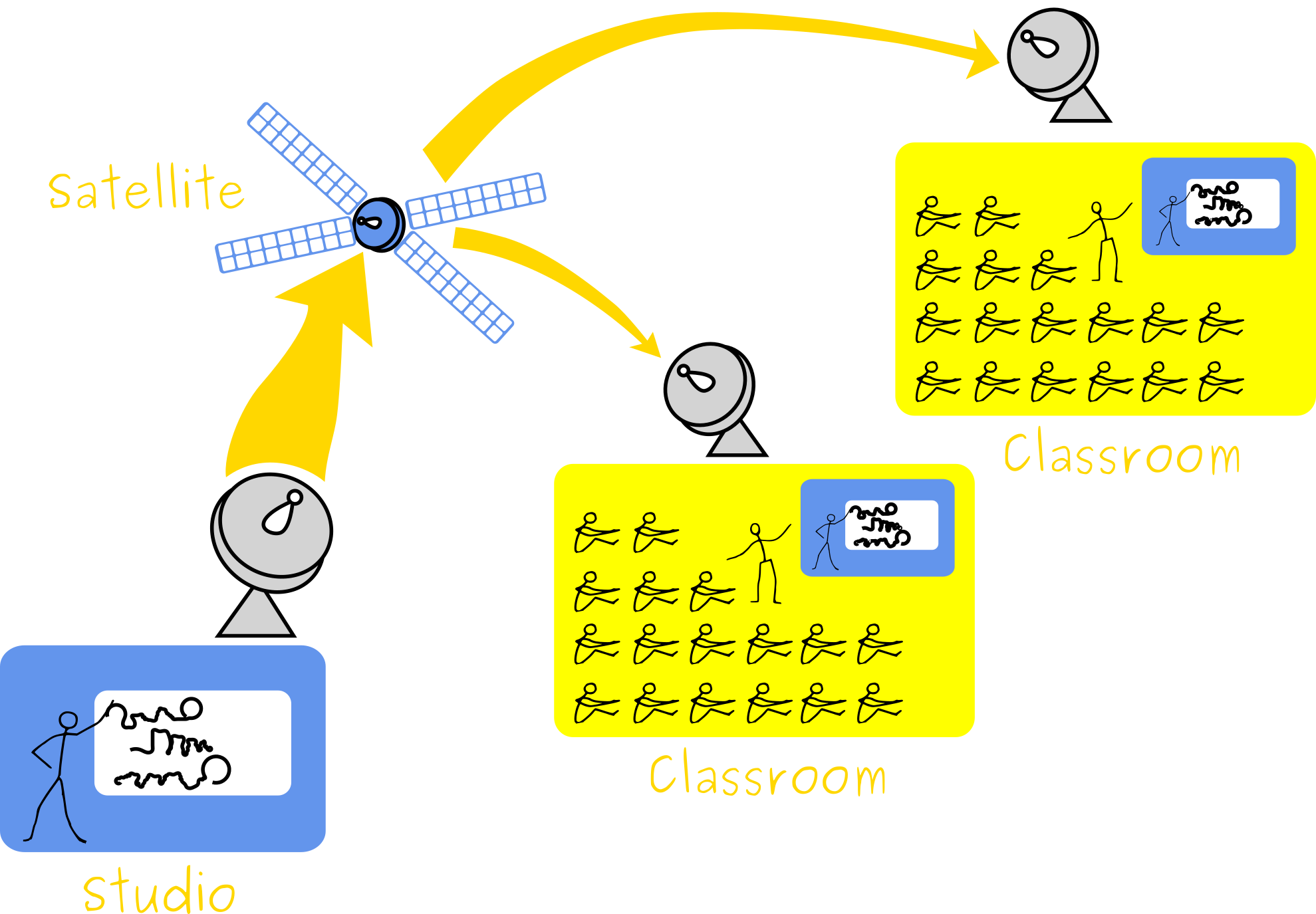
Just like the illustration on the top of the post shows, the core idea in the satellite television in the classroom is to centrally repeat the process of transmission of knowledge to all the learners with an added bonus of synchronicity. One act can be used at multiple locations. But this creates inhibitions for interactivity. Constructivism of the experts can go for a toss. Why do we need to create a custom curriculum for each child, when one expert in one manner can teach them all at the same time?
 

Experiments, Data and Analysis

There are many sad stories of students, burning to carry out an experimental project, who end up with a completely unanalysable mishmash of data. They wanted to get on with it and thought that they could leave thoughts of analysis until after the experiment. They were wrong. Statistical analysis and experimental design must be considered together…
Using statistics is no insurance against producing rubbish. Badly used, misapplied statistics simply allow one to produce quantitative rubbish rather than qualitative rubbish.
–  Colin Robson (Experiment, Design and Statistics in Psychology)

The Tragedy of Sai Baba

shirdi_sai_baba_3
Sai Baba of Shirdi is a patron saint to many. The small town of Shirdi is known to us only because Sai Baba resided and did his work there.
Sai Baba was a fakir. A fakir is someone who has given up on Earthly pleasures and attachments to things physical. It includes very things we describe as wealth and luxury.

fakir, or faqir (/fəˈkɪər/; Arabic: فقیر‎ (noun of faqr)), derived from faqr (Arabic: فقر‎, “poverty”) is a Sufi Muslim ascetic who has taken vows of poverty and worship, renouncing all relations and possessions. Fakirs are prevalent in the Middle East and South Asia. A fakir is thought to be self-sufficient and possesses only the spiritual need for God.

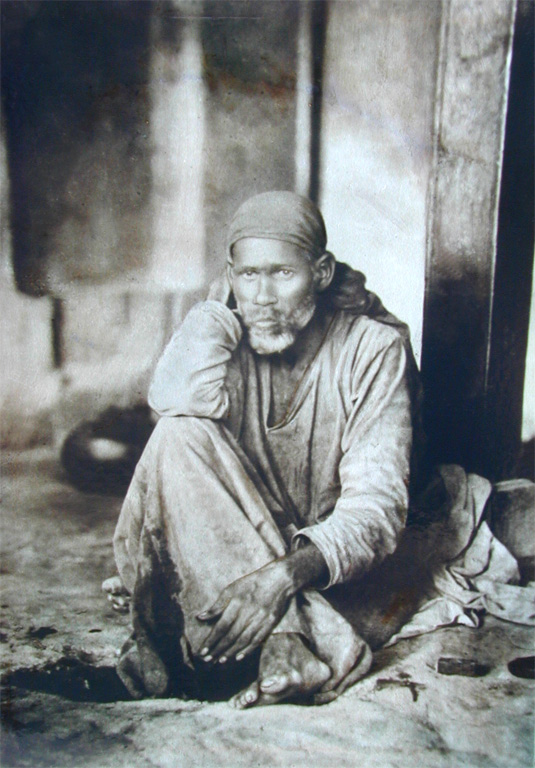
Sai Baba’s time is early 20th century and he is said to have died in 1918. So, we have some photos of Sai Baba when he was alive. Some of them are shown in this post. As you can see in the photo below, he is wearing clothes which seem unwashed and are torn and is sans any adornment which is in line with his status as a fakir. No one had to say to us Inme fakiri dikhti hai to inform us or to confirm his status as a fakir. That he possesed almost nothing in terms of money or wealth is another indicator. What we know of him is because his contemporary disciples have told us so. That he could laurel himself with the finest of clothes of silk and adorn himself with loads of gold and silver ornaments was certainly possible, as his contemporary disciples included some very wealthy people. But instead, being true to his nature, he chose to live a simple life, and not partaking any worldly pleasures or objects that were indeed seen by him as not required.
shirdi_sai2
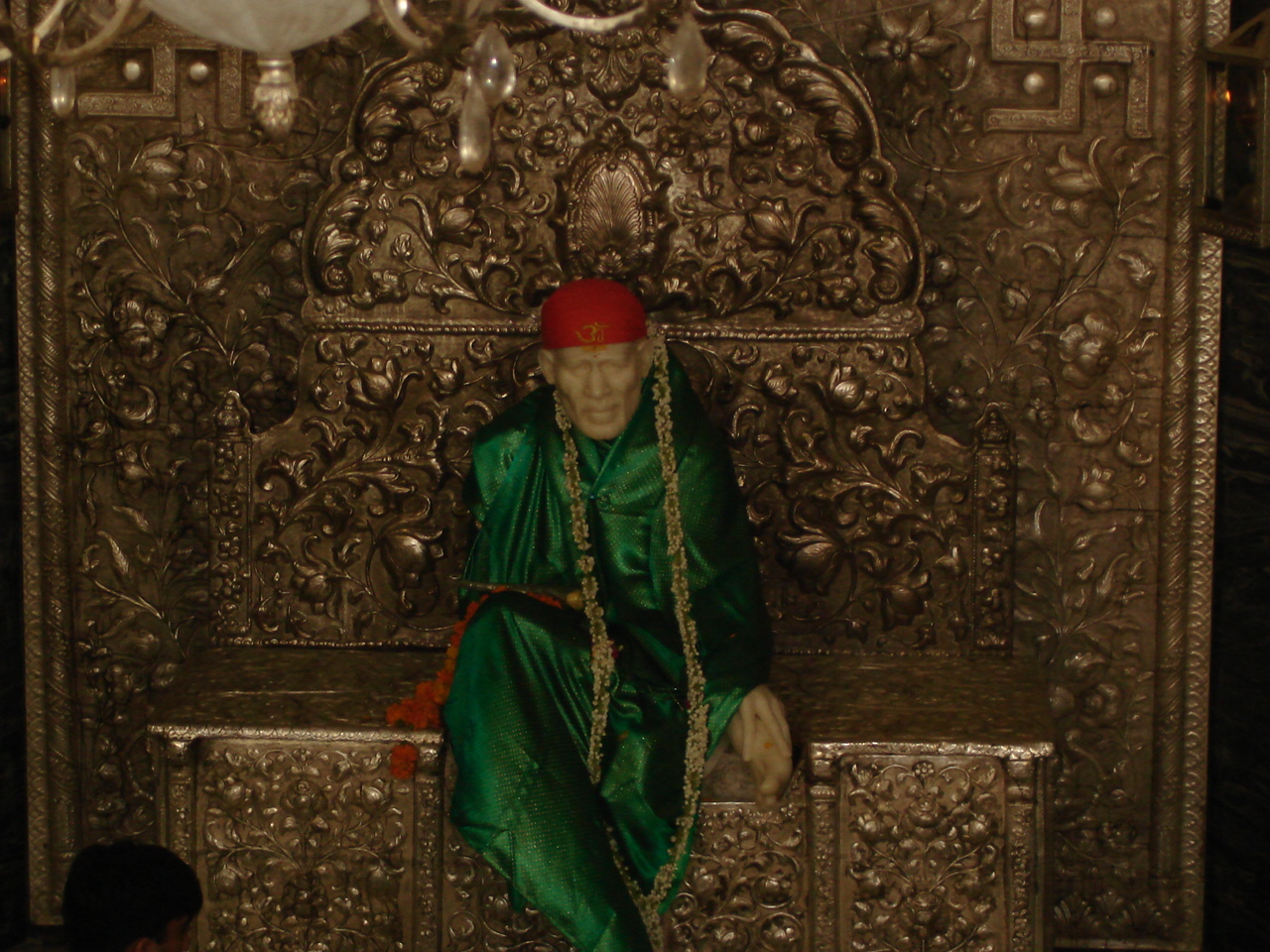
Sai Baba’s work included helping one and all, including especially the downtrodden and people on the margins of the society. And now 100 years after his death, his disciples seem to have reinvented him in their own self-image. Look at the photo above, which is the template for his idols at Shirdi and elsewhere. And look at what they have done with the idol made of marble. They have made it into something which Sai Baba was not. Look at the corruption of his image that they have made.
jai_sai_ramsai_gold_full
A Sai Baba adorned with gold!
This just a perversion of the saint and what he stood for, bringing him down to and equalling in the depravity of wealth which he was indifferent about. He is adorned with the finest silks and surrounded by gold and silver ornaments. And devotees make show off triumphantly what they have “devoted” to the cause of Sai Baba. Someone had made a gold crown for him, how much he himself must have despised something like that, he chose to wear a torn headcloth over a crown.
shirdi_sai_baba
A Sai Baba surrounded by silver!
The revamped image of Sai Baba is in tune with the self-image of the devotees. They see him enjoying the finest silks and ornaments made of gold, silver and diamonds and hard cash just as they do. The people who are “managing” the temple after him, are no different. In name of charity, they are doing anything but charity. The management of the temple now seeks to remove all the beggars from the temple premises. So if Sai Baba came to Shirdi 100 years later, he would not be allowed as he would resemble a beggar. The irony of the situation is not lost,  you just have to visit Shirdi once to see the rampant monetization of the premises. The entire setup is just the anti-thesis of what Sai Baba was and what he stood for. And this my friends is the tragedy of Sai Baba..
(All the images CC by SA from Wikimedia Commons)

The psychology of perception of time in elevators

As a technology, elevators were mandatory for having high rise apartments. You really don’t want to climb up 35 flights of stairs to just get home. My experience with elevators (or lifts as they are more commonly called in India) has been rather strange at times and continues to be so. And I am pretty sure, this is something most people also experience. If you look at it with scrutiny, it is not a strange experience per se, but I found it fascinating nonetheless. As the title of the post suggests, it is about how we perceive the passage of time when we are in an elevator. Now, typically, they would take less than a minute, sometimes perhaps 10-20 seconds to traverse the required distance. Now, here I am considering typical apartment buildings which I have lived in. Not the skyscrapers with 100s of floors. The lift takes about 12 seconds, as timed using a stopwatch to reach my floor if there are no other stops. Of course, if there are stops on intervening floors when people get in or get out, this is longer. So this is the minimum possible time for the lift to take this floor, both ways. That is from my floor to the ground floor and from the ground floor to my floor.

The distance between the ground floor and my floor is constant. The lift and its motor produce the same acceleration and hence same terminal velocity, and the time taken is the same (as measured with a chronometer). I used a quantum-temporal-displacement-chronometer to be sure about time measurement. So our experience of this short travel should also be the same. But this is far from the case. Traveling in the lift gives a variety of experiences. But most strongly it affects how we perceive the passage of time during this short journey. Sometimes it is as if the ground floor is touched as soon as you press the 0 button on the control panel, while at other times it seems time itself has slowed down and it is taking centuries to cover that trivial distance. You may look at the panel displaying the current floor several times during these few seconds and yet it somehow feels lift is moving too slowly. And at times when you are not looking at the panel, and are lost in your thoughts, it chimes to indicate the ground floor has arrived. And you are surprised that it took such a short time. So what kind of blackmagicfuckery is this you wonder? That we subjectively experience something entirely different in terms of time perception is nothing new, but in the case of an elevator, it is so much striking and a part of everyday experience.

I have concocted explanations for the two cases one in which we deem the lift going too slowly and one in which we perceive it be too fast. In the first case, when we perceive the lift to be too slow, we are perhaps not thinking about anything else. Our entire cognitive apparatus and sense organs (eyes and ears) are solely focussed on getting to the destination. Hence, we tend to only look at the floors numbers on the display panel again and again. Expecting it to change often, and our expectation time, the way our neurons are firing is much faster than the real-time. The anticipation is that it should go faster whereas it is going at its own pre-determined pace. Hence, there is a cognitive dissonance that we experience as lift going too slowly. This is even more pronounced if we are in a hurry to get somewhere or are already late. I have seen people press the buttons on the control panel again and again in the hope that it will get them there faster, but it doesn’t work that way. Objectively measured the lift will take the pre-determined time to reach its destination. You are only subjectively experiencing that it is taking longer. Perhaps two persons in the same lift will have a  completely different perception of time depending upon their mental states.

Now coming to the other case, in which we experience the time to be too short, perhaps our cognitive system is already too loaded. This is when before entering the lift we are deep in a thought chain that we are processing. In such a scenario, we expect the lift to just take us to the destination once we press the button. Our schema for the elevator is activated, we don’t have to do any cognitive processing once we press the button. The schema, as an automated response shaped by our experiences with elevators and induction, works seamlessly when not interfered with, assuming that the elevator is behaving in its normal manner. I have had experience of an elevator which could close the door as you were trying to enter. It was almost as if the elevator waited like a predator to catch its pray. Some logic circuits in this elevator were fried, and it won’t let you off you when it caught your leg. Or the elevator might itself have a severe case of fear of heights (vertigo?), as told in HHGTG and would not want to travel to heights. But these being extreme cases, most elevators are domesticated and docile, doing the deed they are designed to do depositing and delivering cargo to destinations, despite the draconian ways in which some travellers might treat them.

Coming back to the explanation for the former case, perhaps due to no cognitive load we are trying to screw with the automated schema. We are just running the simulation of the schema for elevators in our minds, and confusing it with the real world out there. Hence there is a cognitive dissonance. We are expecting something in the mind, while we are seeing something in reality. I have also tried this experiment sometimes when this happens. I close my eyes and mentally calculate the amount of time that might have passed and try to predict the floor that I might have reached. I open my eyes to check if I have guessed correctly but most of the times I am incorrect in the guess.

When we have company in the lift, the temporal experience can be altered and can be subjective as well. If you are with a person whom you find attractive or admire, you might feel that the time taken was perhaps too short. On the other hand, if it is somebody whom you find disgusting or un-attractive, the same journey might seem like a lifetime or a life sentence. In this case, perhaps the cognitive system has become completely Epicurean (when it is not?) in its approach and wants to maximise the good times and minimise the not-so-good ones.

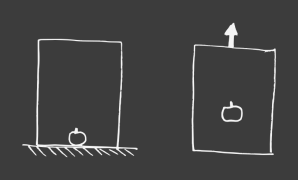
But this does not end the discussion of the elevators. Experiments in elevators provide some useful insights in fundamental physics. This is related to the concepts of frames of reference and the so-called equivalence principle. Elevators are used in Gedanken experiments for thinking about the equivalence principle, which later gave rise to the general theory of relativity.

Apple falling inside a box that rests on the Earth. Indistinguishable motion when the appl is inside an accelerated box in outer space.
 
The equivalence principle states that to an observer in a freely falling elevator the laws of physics are the same as in the inertial frames of special relativity (at least in the  immediate neighbourhood of the centre of the elevator). The effects due to the accelerated motion and to the gravitational forces exactly cancel. An observer sitting in an enclosed elevator cannot, if he observes apparent gravitational forces, tell what portion of these correspond to acceleration and what portion to actual gravitational forces. He will detect no forces at all unless other forces (i.e., other than gravitational forces) act on the elevator. In particular, the postulated principle of equivalence requires that the ratio of the inertial and gravitational masses be M_i/M_g = 1. The “weightlessness” of a man in orbit in a satellite is a consequence of the equivalence principle. Pursuit of the mathematical consequences of the  principle of equivalence leads to the general theory of relativity.. –
From Kittel Mechanics – Berkeley Physics Course Volume 1


Another fundamental aspect of physics which uses elevators is the notion of inertial and non-inertial frames of reference. An inertial frame of reference is one in which the particle experiences no acceleration (either transitional or rotational).

Our ability to say whether or not a particular reference frame is an inertial frame will depend in a strict sense upon the precision with which we can detect the effects of a small acceleration of the frame. In a practical sense, a reference frame in which no acceleration is observed for a particle believed to be free of any force and constraint is taken to be an inertial frame.

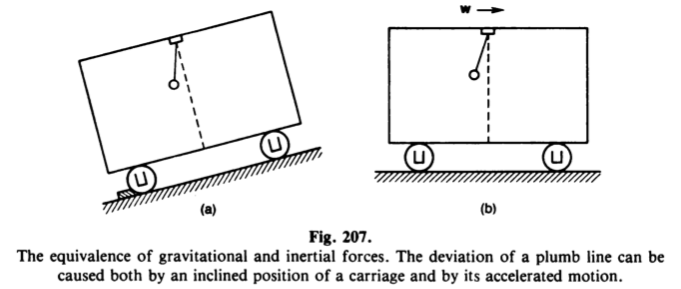
Now an elevator moving with a constant downward acceleration will be no different than the gravity that we experience on the surface of the Earth. No dynamical experiments conducted inside the elevator will ever tell us whether the elevator is moving with constant acceleration or it is stationary at the surface of the Earth. To know what is the actual case we have to go and perform experiments / take observations outside the lift.

Screenshot 2019-07-31 at 8.21.51 PM

Thus the humble lift or elevator has more to offer to you than just taking you from point A to point B in your daily routine.

Genetics and human nature

Usually, in the discussion regarding human nature, there is a group of academics who would like to put all the differences amongst humans to non-genetic components. That is to say, the cultural heritage plays a much more important or the only important role in the transfer of characteristics. In the case of education, this is one of the most contested topics. The nature-nurture debate as it is known goes to the heart of many theories of human behaviour, learning and cognition. The behaviourist school was very strong until the mid 20th century. This school strongly believed that the entirety of human learning is dependent only on the environment with the genes or (traits inherited from the parents) playing little or no role. This view was seriously challenged on multiple fronts with attacks from at least six fields of academic inquiry: linguists, psychology, philosophy, artificial intelligence, anthropology, and neuroscience. The advances in these fields and the results of the studies strongly countered the core aspects of behaviourism. Though the main thrust of the behaviourist ideas seems to be lost, but the spirit still persists.  This is in the form of academics who still deny any role for genes, or even shun at the possibility of genes having any effect on human behaviour. They say it is all the “environment” or nurture as they name it. Any attempt to study the genetic effects are immediately classified as fascist, Nazi or equated to social Darwinism and eugenics. But over several decades now, studies which look at these aspects have given us a mounting mountain of evidence to lay the idea to rest. The genes do play a definitive role and what we are learning is that the home environment may not be playing any role at all or a very little role in determining how we turn out. Estimates range from 0 to 10%. The genes, on the other hand, have been found to have about 50% estimate, the rest 40% being attributed to a “unique”  environment that the individual experiences.   Though typically, some of the individuals in academia argue strongly against the use of genetics or even mention of the word associated with education or any other parameters related to education. But this has to do more with their ideological positions, which they do not want to change, than actual science. This is Kuhnian drama of a changing science at work. The old scientists do not want to give up on their pet theories even in the case of evidence against them. This is not a unique case, the history of science is full of such episodes.
Arthur Jensen, was one of the pioneers of studying the effect of genetic heritability in learning. And he lived through the behaviourist and the strong nurture phases of it. This quote of his summarises his stand very well.

Racism and social elitism fundamentally arise from identification of individuals with their genetic ancestry; they ignore individuality in favor of group characteristics; they emphasize pride in group characteristics, not individual accomplishment; they are more concerned with who belongs to what, and with head-counting and percentages and quotas than with respecting the characteristics of individuals in their own right. This kind of thinking is contradicted by genetics; it is anti-Mendelian. And even if you profess to abhor racism and social elitism and are joined in battle against them, you can only remain in a miserable quandary if at the same time you continue to think, explicitly or implicitly, in terms of non-genetic or antigenetic theories of human differences. Wrong theories exact their own penalties from those who believe them. Unfortunately, among many of my critics and among many students I repeatedly encounter lines of argument which reveal disturbing thought-blocks to distinguishing individuals from statistical characteristics (usually the mean) of the groups with which they are historically or socially identified.
–  Arthur Jensen, Educability and Group Differences 1973

As the highlighted sentence in the quote remarks, the theories which are wrong or are proven to be wrong do certainly exact penalties from their believers. One case from history of science being the rise and rise of Lysenkoism in the erstwhile USSR. The current bunch of academics who strongly deny any involvement of genes in the theories of human learning are no different.

Asimov on science literacy

Science literacy does not have a unique definition. Depending on what your ideas about science are, the meaning of science literacy will change. But being scientifically literate, is usually taken as a sign of being informed, being rational in decisions. Here is what the great science and science-fiction writer Issac Asimov had to say about its importance.

A public that does not understand how science works can, all too easily, fall prey to those ignoramuses … who make fun of what they do not understand, or
to the sloganeers who proclaim scientists to be the mercenary warriors of today, and the tools of the military. The difference … between … understanding and not understanding . . . is also the difference between respect and admiration on the one side, and hate and fear on the other.
– Isaac Asimov


Why philosophy is so important in science education

This is a nice article whicH I have reposted from AEON…

Each semester, I teach courses on the philosophy of science to undergraduates at the University of New Hampshire. Most of the students take my courses to satisfy general education requirements, and most of them have never taken a philosophy class before.
On the first day of the semester, I try to give them an impression of what the philosophy of science is about. I begin by explaining to them that philosophy addresses issues that can’t be settled by facts alone, and that the philosophy of science is the application of this approach to the domain of science. After this, I explain some concepts that will be central to the course: induction, evidence, and method in scientific enquiry. I tell them that science proceeds by induction, the practices of drawing on past observations to make general claims about what has not yet been observed, but that philosophers see induction as inadequately justified, and therefore problematic for science. I then touch on the difficulty of deciding which evidence fits which hypothesis uniquely, and why getting this right is vital for any scientific research. I let them know that ‘the scientific method’ is not singular and straightforward, and that there are basic disputes about what scientific methodology should look like. Lastly, I stress that although these issues are ‘philosophical’, they nevertheless have real consequences for how science is done.
At this point, I’m often asked questions such as: ‘What are your qualifications?’ ‘Which school did you attend?’ and ‘Are you a scientist?’
Perhaps they ask these questions because, as a female philosopher of Jamaican extraction, I embody an unfamiliar cluster of identities, and they are curious about me. I’m sure that’s partly right, but I think that there’s more to it, because I’ve observed a similar pattern in a philosophy of science course taught by a more stereotypical professor. As a graduate student at Cornell University in New York, I served as a teaching assistant for a course on human nature and evolution. The professor who taught it made a very different physical impression than I do. He was white, male, bearded and in his 60s – the very image of academic authority. But students were skeptical of his views about science, because, as some said, disapprovingly: ‘He isn’t a scientist.’
I think that these responses have to do with concerns about the value of philosophy compared with that of science. It is no wonder that some of my students are doubtful that philosophers have anything useful to say about science. They are aware that prominent scientists have stated publicly that philosophy is irrelevant to science, if not utterly worthless and anachronistic. They know that STEM (science, technology, engineering and mathematics) education is accorded vastly greater importance than anything that the humanities have to offer.
Many of the young people who attend my classes think that philosophy is a fuzzy discipline that’s concerned only with matters of opinion, whereas science is in the business of discovering facts, delivering proofs, and disseminating objective truths. Furthermore, many of them believe that scientists can answer philosophical questions, but philosophers have no business weighing in on scientific ones.
Why do college students so often treat philosophy as wholly distinct from and subordinate to science? In my experience, four reasons stand out.
One has to do with a lack of historical awareness. College students tend to think that departmental divisions mirror sharp divisions in the world, and so they cannot appreciate that philosophy and science, as well as the purported divide between them, are dynamic human creations. Some of the subjects that are now labelled ‘science’ once fell under different headings. Physics, the most secure of the sciences, was once the purview of ‘natural philosophy’. And music was once at home in the faculty of mathematics. The scope of science has both narrowed and broadened, depending on the time and place and cultural contexts where it was practised.
Another reason has to do with concrete results. Science solves real-world problems. It gives us technology: things that we can touch, see and use. It gives us vaccines, GMO crops, and painkillers. Philosophy doesn’t seem, to the students, to have any tangibles to show. But, to the contrary, philosophical tangibles are many: Albert Einstein’s philosophical thought experiments made Cassini possible. Aristotle’s logic is the basis for computer science, which gave us laptops and smartphones. And philosophers’ work on the mind-body problem set the stage for the emergence of neuropsychology and therefore brain-imagining technology. Philosophy has always been quietly at work in the background of science.
A third reason has to do with concerns about truth, objectivity and bias. Science, students insist, is purely objective, and anyone who challenges that view must be misguided. A person is not deemed to be objective if she approaches her research with a set of background assumptions. Instead, she’s ‘ideological’. But all of us are ‘biased’ and our biases fuel the creative work of science. This issue can be difficult to address, because a naive conception of objectivity is so ingrained in the popular image of what science is. To approach it, I invite students to look at something nearby without any presuppositions. I then ask them to tell me what they see. They pause… and then recognise that they can’t interpret their experiences without drawing on prior ideas. Once they notice this, the idea that it can be appropriate to ask questions about objectivity in science ceases to be so strange.
The fourth source of students’ discomfort comes from what they take science education to be. One gets the impression that they think of science as mainly itemising the things that exist – ‘the facts’ – and of science education as teaching them what these facts are. I don’t conform to these expectations. But as a philosopher, I am mainly concerned with how these facts get selected and interpreted, why some are regarded as more significant than others, the ways in which facts are infused with presuppositions, and so on.
Students often respond to these concerns by stating impatiently that facts are facts. But to say that a thing is identical to itself is not to say anything interesting about it. What students mean to say by ‘facts are facts’ is that once we have ‘the facts’ there is no room for interpretation or disagreement.
Why do they think this way? It’s not because this is the way that science is practised but rather, because this is how science is normally taught. There are a daunting number of facts and procedures that students must master if they are to become scientifically literate, and they have only a limited amount of time in which to learn them. Scientists must design their courses to keep up with rapidly expanding empirical knowledge, and they do not have the leisure of devoting hours of class-time to questions that they probably are not trained to address. The unintended consequence is that students often come away from their classes without being aware that philosophical questions are relevant to scientific theory and practice.
But things don’t have to be this way. If the right educational platform is laid, philosophers like me will not have to work against the wind to convince our students that we have something important to say about science. For this we need assistance from our scientist colleagues, whom students see as the only legitimate purveyors of scientific knowledge. I propose an explicit division of labour. Our scientist colleagues should continue to teach the fundamentals of science, but they can help by making clear to their students that science brims with important conceptual, interpretative, methodological and ethical issues that philosophers are uniquely situated to address, and that far from being irrelevant to science, philosophical matters lie at its heart.Aeon counter – do not remove

 
Subrena E Smith
This article was originally published at Aeon and has been republished under Creative Commons.

The cuckoo Cuckoo

When I was living in Pune, the window of my room opened near a hedge. The hedge was lush green and had many trees. The tree closest to my window was that of a fig, (umber, उंबर in Marathi). Now throughout the day and the night, a variety of fauna visited the tree. Avians, insects, mammals all of them benefitted from the tree.
During the prime of the fruiting season, one would get an aroma of ripe fruits in the middle of the night. The closest smell I can think of is that of a very sweet and ripe apple. Nothing else comes close. I would wonder why does this smell manifest in the middle of the night. Then I discovered that there would be fruit bats munching on these delicious fruits, and the tearing of the fruits would give this aroma. During the day, various other birds including crows, cuckoos, mynahs, some times hornbills too, along with the resident squirrels. So this tree was full of life. A couple of crows used to sit on the tree for hours, caressing each other. Some love couple it was.
But the reason I am writing this post is because of a cuckoo the Asian koel (Eudynamys scolopaceus), a cuckoo who was a cuckoo. Now, as a noun, the cuckoo refers to the bird, but as an adjective, it refers to someone who is mad. Now, what does a cuckoo mean? It means a mad cuckoo. Now one would hear the cucu of the cuckoo during their mating season at the start of the summer, we find nothing odd. In fact, the call of the cuckoo signifies the season change, and for rest of the year, the cuckoo stays relatively silent.

Being familiar birds with loud calls, references to them are common in folklore, myth and poetry. It is traditionally held in high regard for its song … Wiki

And mostly one would hear the cuckoo only during the day. All this being said, I come to the protagonist of the post.
This one cuckoo was mad. I would say this because it would sit on this fig tree and sing in the harshest possible way, much higher notes than usual melodious tone, in the middle of the night. At 1 AM, at 3 AM at any time in the night. The cuckoo would sit right next to the branch of the tree which was closest to my window and sound the alarm. When I first heard it, I woke up thinking that the world is coming to an end or some epic disaster has occurred. The cuckoo from hell. I looked at it from the window, hoping that its eyes are glowing red with hellfire. I could not make sense of what was happening. The intensity and the harshness of the vocalization were like a shock given to me. Once woken, I could not sleep due to the continuous assault on my auditory senses. That night I slept, uneasily, after a few hours almost at the start of the dawn.
This event repeated over many other days.  But over many episodes, I got used to this. It was like my internal cognitive mechanisms created filters for ignoring this. Only on an occasional off day, I would be awakened by the calls. Some of my friends, who had the misfortune to visit me during those days would get the jolt to be woken in the middle of the night.
I don’t know whether this was normal behaviour of the cuckoo. I am sure avian experts would be able to put more light on this, but for me, it was cuckoo who had gone cuckoo.